

Key Takeaways
- Asking 2–4 well-chosen questions is the ideal number in Australian job interviews.
- The best interview questions focus on role expectations, success metrics, and team culture.
- Questions should sound practical and respectful, not entitled or overly personal.
- End-of-interview questions help you stand out and clarify next steps.
- Strong questions help you assess the employer while showing confidence and preparation.
Introduction
If you want to sound prepared in an Australian interview, don’t just answer well. Ask better questions. The Best Questions To Ask In A Job Interview In Australia help you confirm the role, spot red flags, and show you think like a professional.
Most candidates freeze when they hear, “have you got any questions”. The trick is having 6–10 ready, then choosing 2–4 that fit the moment. This guide gives you good questions to ask in an interview, plus the best end of interview questions that close strongly.
I’ll also cover what people often search at the same time, like how to answer tell me about yourself, second interview questions, and even why “salary talk” timing matters in Australia.
Oliver Bennett
Job Seeker • Perth, WA • Australia
Email: oliver.bennett.cv@gmail.com • Phone: +61 449 372 816
Short Answer (Australia)
In Australia, a resume should usually be 2 pages long. This is the standard length preferred by most Australian employers and recruiters.
Why Australia Prefers 2 Pages
Australian employers expect enough detail to understand your experience, skills, and results.
Unlike some countries, a one-page resume is often considered too short for full-time roles.
Two pages allow space for:
• Relevant work history
• Achievements and responsibilities
• Skills and tools used
• Education and certifications
Resume Length by Experience Level
Students / Graduates: 1–2 pages
Early to Mid-Career Professionals: 2 pages (ideal)
Senior or Management Roles: 2–3 pages (only if relevant)
Academic or Research Roles: 3+ pages may be acceptable
When a 1-Page Resume Is Acceptable
• Entry-level or student roles
• Casual, retail, or hospitality jobs
• Limited work experience
• When the job advertisement specifically requests a short resume
Common Mistakes to Avoid
❌ Shrinking font size to force one page
❌ Including irrelevant or outdated roles
❌ Submitting 4–5 pages without a senior-level reason
❌ Listing duties without showing results
Safe Rule for Australian Job Seekers
If you are unsure, submit a clear, well-formatted 2-page resume. Australian recruiters prefer relevance and clarity over overly short or overly long resumes.
🚀 Create your resume quickly and for free!
Asking the Right Questions in an Interview
The best question does one of three things:
- It clarifies expectations (so you know what you’re signing up for).
- It shows judgement (you think about outcomes, not just tasks).
- It helps you decide (culture fit, manager style, workload reality).
In Australian interviews, questions that land well are direct, polite, and practical. Long speeches before a question can feel awkward. Keep it simple.
If you’re also polishing your resume, keep your story consistent across documents and interview answers. ATS-friendly language matters. Use role keywords like “stakeholder management,” “WHS,” “KPI,” “customer service,” “project coordination,” or “BIM” when they match your real experience.
✨ Create your perfect resume now!
Questions to Ask in an Interview

Below is a full set of what questions can i ask at an interview. Pick what suits the stage and the role. These are written so you can copy and say them.
The Role
Is this role new? If not, how has it evolved?
This question tells you whether the role is growing, replacing turnover, or changing scope. It also shows you understand change over time, which matters in many Australian teams after Covid-19.
Is there scope for career progression?
This is one of the best interview questions to ask interviewer if you want long-term growth. It also helps you confirm whether the role has a pathway or is a dead end.
Can you tell me a bit about the predecessor of the role?
You learn what “good” looked like before you. If the answer is vague, you can ask what success looked like in the last 6–12 months.
What does a typical day look like?
This is a top “reality check” question. It stops you from accepting a role that sounds good on paper but feels chaotic in practice.
Can you tell me more about the team?
This helps you understand team size, seniority mix, and how work flows. In Australia, team dynamics and communication style matter a lot.
🚀 Start building your dream resume today!
The Team
Who are the key stakeholders?
This question is gold for roles in HR, engineering, resources, legal, and operations. It also helps you understand whether stakeholder management is internal, external, or both.
How does the team fit into the overall structure of the company?
This tells you whether the team is central, support, or “always fighting for resources.” It helps you spot organisational friction early.
What constitutes success for the team and the role?
If you want excellent questions to ask in an interview, ask about success metrics. It shows you care about outcomes, not just duties.
The Interviewer
What’s your background?
People like talking about their experience. It also gives you insight into what they value and how they lead.
From your perspective, what’s it like to work here?
This is a clean culture question. You can listen for tone, not just words.
What is your management style when leading hybrid teams? Are there any best practices that you live by?
Hybrid and flexible work is common in many Australian workplaces. This question checks how they manage trust, performance, and communication.
The Organization
What are the main challenges and opportunities the business faces?
This is one of the best questions to ask to interviewer because it shows commercial awareness. It works well in Australia across corporate, government, and resources.
How long do employees usually remain with the business?
Retention gives you a quick signal about stability and culture. Listen for whether the answer feels real.
What were your key learns from the Covid-19 crisis, both from a business and a leadership point of view?
This helps you understand how the organisation handled pressure. It also signals maturity without sounding negative.
✨ Make your resume shine fast!
Learning and Development
How often will my performance be reviewed?
In Australia, performance reviews vary widely. This question helps you understand expectations, feedback cadence, and how growth is managed.
What training opportunities are available?
Training can include internal mentoring, external courses (Coursera), or structured programs. For grads, this question is often essential.
Next Steps
What’s the next step?
Simple and effective. It helps you understand timeline, process, and decision flow. It also closes politely.
Questions to Avoid
These are common “no” questions early in the process:
- “How soon can I take leave?”
- “Can I work from home every day?” (too early unless the job is advertised as remote)
- “What’s the salary?” in a first screen, if you haven’t discussed role scope yet
- Questions answered on Seek.com.au, LinkedIn Australia, or the company website
- Overly personal questions
You can still ask about flexibility and salary. Timing matters. I’ll cover that next.
🚀 Boost your career today!
Do You Ask About Salary?
Yes, you can ask about salary in Australia. Ask at the right time.
A safe approach:
- In an early recruiter screen: ask about the salary range and whether it matches market expectations.
- In later rounds: ask about package details, bonus structure, superannuation, and review cycle.
Try wording like:
- “Can you share the salary range budgeted for the role?”
- “How does salary review work here, and how is performance linked to it?”
If you want to validate expectations, people often check sources like Glassdoor Australia or salary guides such as a Hays Interview Guide. Don’t quote numbers aggressively in the interview. Use the range to decide whether to continue.
Only Time for One Question?
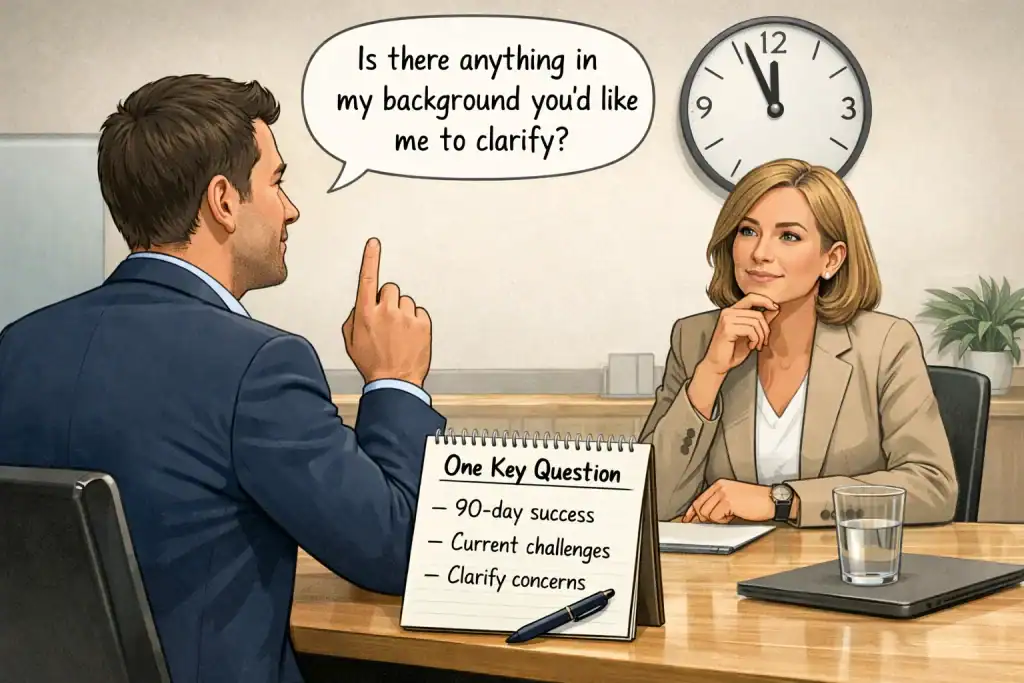
If time is tight, choose one that gives the most signal fast. These work well in Australia:
- “What does success look like in the first 90 days?”
- “What are the biggest challenges in this role right now?”
- “Is there anything in my background you want me to clarify before next steps?”
That last one is underrated. It gives you a chance to fix concerns in the room.
Mastering Job Interview Questions for Employers
This section is for hiring managers and founders. It also helps candidates understand what is being assessed.
The Importance of Thoughtful Interview Questions
Good interview questions reduce hiring mistakes. They help you test skill, judgement, and behaviour. They also reduce bias when you use consistent questions across candidates.
In Australia, structured interviews are common in larger organisations, government, and engineering environments (WA resources, EPCM, EPC). It helps teams defend hiring decisions fairly.
If you’re a candidate, this is why you’ll see repeated patterns in interviews. If you’re an employer, it’s why your question design matters.
Common Interview Question Types and Examples
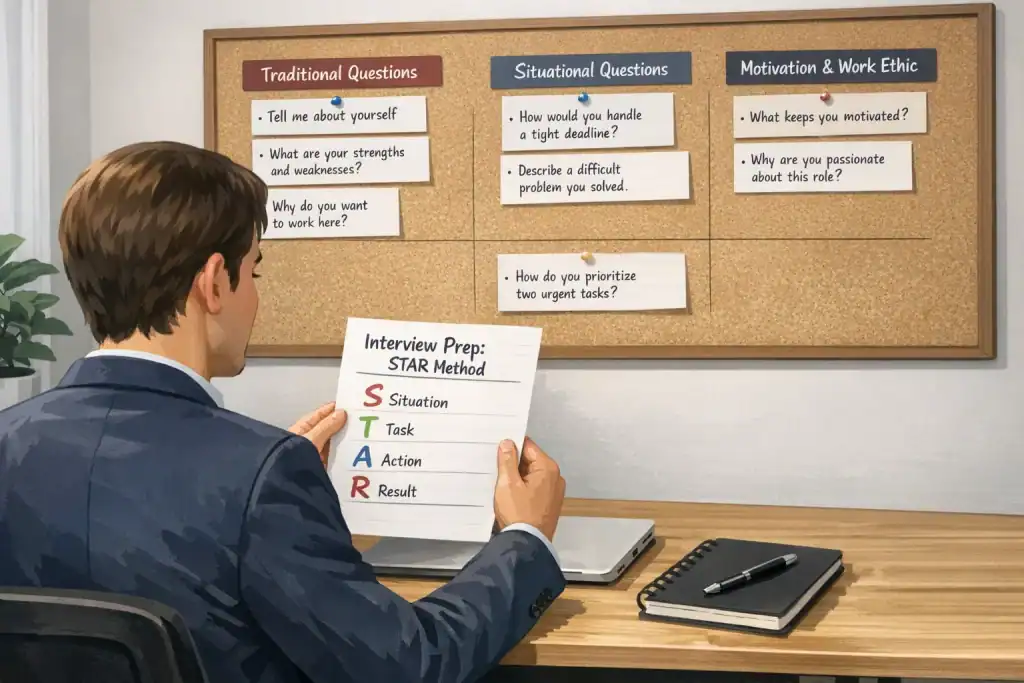
These different types of interview questions show up in almost every Australian hiring process.
Traditional Questions
Traditional questions check background and motivation.
Traditional interview question examples:
- “Tell me about yourself.” (This is where people search how to answer tell me about yourself)
- “Why do you want this job?”
- “Why should we hire you?”
- “What are your strengths?”
- “What are your weaknesses?”
Candidates often ask for job interview questions and answers sample pdf. In practice, a one-page cheat sheet works better than a giant PDF. Keep 6–8 stories ready with short STAR structure.
Situational Questions
Situational questions test judgement in a hypothetical scenario.
Situational interview question examples
- “A stakeholder is unhappy with a delay. What do you do?”
- “You have two urgent tasks due today. How do you prioritise?”
- “A teammate disagrees with your approach. How do you handle it?”
Communication and Teamwork Questions
These test collaboration and clarity. They are common in Australia’s team-based workplaces.
Communication and teamwork examples:
- “Tell me about a time you handled conflict.”
- “How do you keep stakeholders updated?”
- “How do you work with different personalities?”
- “How do you give and receive feedback?”
Motivation and Work Ethic Questions
These test consistency and drive.
Motivation and work ethic question examples:
- “What keeps you motivated in repetitive work?”
- “How do you handle pressure?”
- “Tell me about a time you made a mistake and fixed it.”
Company Culture Fit Questions
Culture fit questions test work style, values, and expectations. “Fit” should never mean “same personality.” It should mean “can work well in this environment.”
Company culture fit interview examples:
- “What kind of manager helps you do your best work?”
- “What does a good team culture look like to you?”
- “How do you like to communicate in hybrid teams?”
Crafting Effective Interview Questions
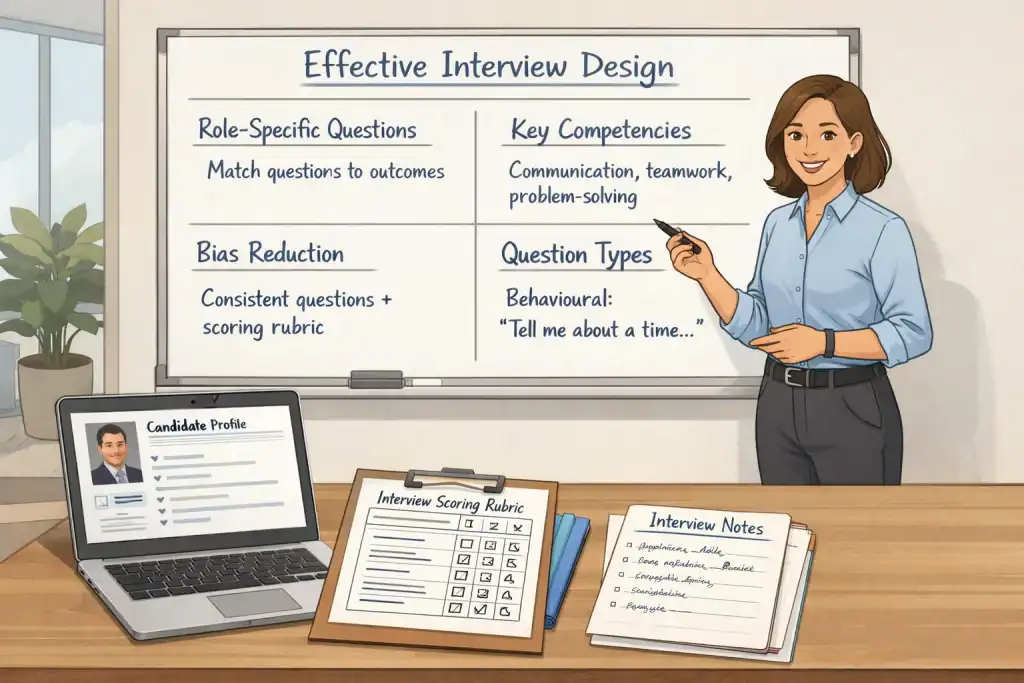
If you’re hiring, these steps make your interviews stronger and fairer.
Customise Questions to the Role
Match questions to job outcomes. A structural engineer, HR coordinator, and mining engineer should not get the same interview.
Examples:
- Engineers: safety thinking, documentation, problem-solving, stakeholder updates
- HR: confidentiality, process discipline, communication, policy judgement
- Sales: pipeline thinking, objection handling, resilience, customer understanding
Focus on Key Competencies
Pick 5–7 competencies and test them repeatedly:
- communication
- teamwork
- problem-solving
- reliability
- learning speed
- role-specific technical skill
- stakeholder management
Mitigate Bias
Bias drops when you:
- ask consistent questions
- score answers against a simple rubric
- compare candidates on evidence, not vibe
Ask Behavioural Questions
Behavioural questions produce real examples, not guesses:
- “Tell me about a time…”
- “What did you do?”
- “What was the result?”
Use Open-Ended and Closed-Ended Questions
Open-ended questions give stories. Closed-ended questions confirm facts.
Examples:
- Open: “Walk me through how you handled that.”
- Closed: “How many stakeholders were involved?” “What tools did you use?”
The Best Interview Questions to Ask Candidates
Candidates often search questions to ask interviewee because they’re hiring for the first time. Here’s a clean structure.
The Four Types of Common Interview Questions
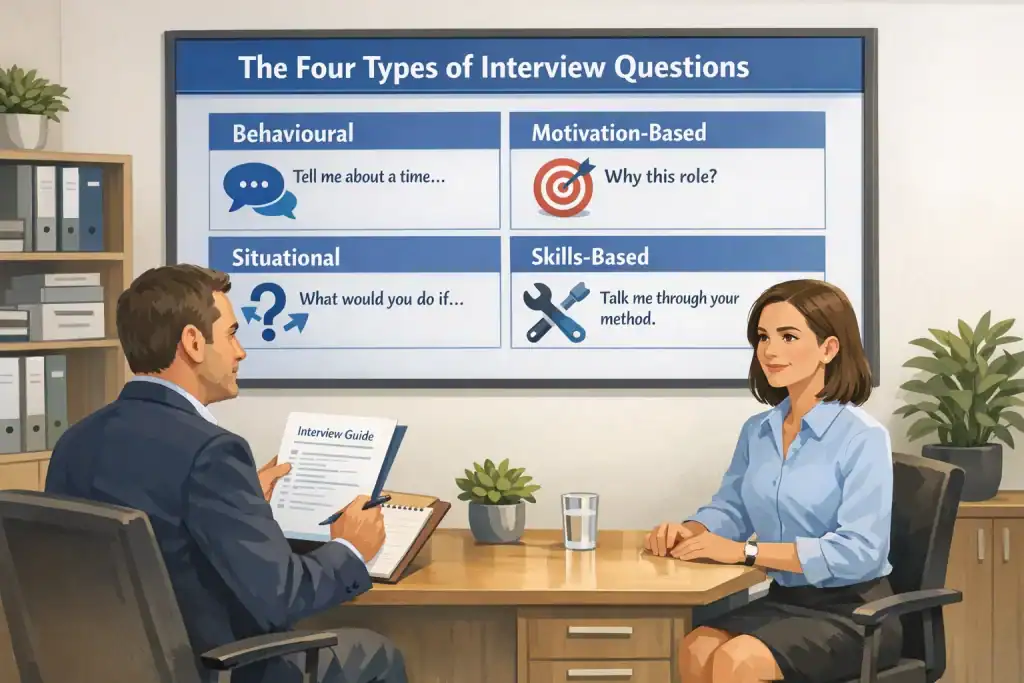
Behavioural
Behavioural questions test past behaviour.
Examples of behavioural questions:
- “Tell me about a time you improved a process.”
- “Tell me about a time you received tough feedback.”
- “Tell me about a time you handled a difficult customer.”
Motivation-Based
Motivation questions test drivers and fit.
Examples of motivation-based questions:
- “Why this role, and why now?”
- “What work do you enjoy most?”
- “What environment helps you do your best work?”
Situational
Situational questions test judgement and response style:
- “A deadline changes suddenly. What do you do?”
- “A key stakeholder is unhappy. What’s your next step?”
Skills-Based
Skills-based questions test capability:
- “Show me how you would approach this task.”
- “Talk me through your method.”
- “What tools and systems have you used?”
This is where you’ll see role-specific sets like questions asked in a retail job interview or executive interview questions.
How to Identify Great Interview Responses
A simple way to assess responses is STAR.
Situation/Task
Did the candidate explain context clearly, without rambling?
Action
Did the candidate explain what they did, not what “the team” did?
Result
Did the candidate show outcomes? Numbers help, but clear impact also works.
Nailed It: Questions to Ask at Your Next Interview
If you’re the candidate, this is your quick “pick list.” These are strong, safe, and Australia-friendly.
Questions to Ask a Potential Employer
Here are good questions to ask at the end of an interview and during the interview. Choose 3–4.
Role clarity (safe in any interview)
- “What are the top priorities in the first month?”
- “What does success look like in the first 90 days?”
- “What are the biggest challenges in this role right now?”
Team and manager fit
- “How does the team work day to day?”
- “How do you like to give feedback?”
- “How do you manage hybrid teams?”
Growth and learning
- “What training opportunities are available?”
- “Is there scope for career progression?”
- “How often will performance be reviewed?”
Smart closing questions
- “What’s the next step?”
- “Is there anything in my background you’d like me to clarify?”
- “What would make someone the right hire for this role?”
If you want a simple structure, keep 2 “role questions,” 1 “team question,” and 1 “next steps” question ready.
Quick Australia resume example that matches your questions (ATS-friendly)
When your questions are strong, your resume should support the same story. Here’s a short Australian-style profile + skills snippet you can adapt.
Candidate Profile (example):
Operations Support professional with 4+ years of experience in scheduling, customer communication, and process improvement. Strong stakeholder management and reliable delivery in busy environments.
Key Skills (ATS keywords):
Stakeholder management, customer service, time management, documentation, KPI reporting, Microsoft Excel, process improvement, team collaboration
This aligns with questions about success metrics, team workflows, and performance review frequency.
If you want related reading on your site, use these internal link keywords exactly:
- words to describe yourself
- skills to put on resume
- weaknesses in job interview
- how many pages should a resume be
- why should we hire you
- what is a cv
- chat gpt cover letter
- is a cv a resume
- online jobs no experience
Notes on “interesting” and “funny” interview topics
People search interesting interview topics and funny interview questions. In Australia, a light moment can help, but keep it safe. If you mention pop culture (like Sabrina Carpenter and “Espresso”) do it only if the interviewer starts that tone. Otherwise, stay professional.
If you’re interviewing at places like UQ or even a UQ Library student role, keep questions practical and aligned with the job. In engineering environments (Henderson Marine Complex, power systems engineers, structural engineers, mining engineers, WA resources), focus on safety, documentation, communication, and delivery.
Summary
The best questions to ask in a job interview in Australia help you understand the role, confirm expectations, and show that you think beyond just getting hired. Australian employers value clear, practical questions about success, teamwork, culture, and growth. By preparing a small set of thoughtful questions and asking them at the right time, you can leave a strong final impression and make better decisions about your next career move.
FAQs
What are the best questions to ask in a job interview in Australia?
How many questions should I ask in an interview?
What are good questions to ask at the end of an interview?
Should I ask about salary in an Australian interview?
What questions should I avoid asking?
Author Information
Anny Kuratulain | Career Development Expert
Anny Kuratulain is a seasoned professional with over 9 years of experience in social media strategy, freelance coaching, and resume optimization. Specializing in helping professionals in various fields, Anny provides expert guidance on crafting resumes that stand out to hiring managers and Applicant Tracking Systems (ATS). Anny’s insights focus on empowering job seekers to highlight their key strengths, tailor resumes to job descriptions, and land the jobs they desire.

