
{HEADER}
Key Takeaways Summary
- Prioritize Safety and Security: Airlines value passenger safety above all; highlight your knowledge of FAA/EASA regulations and emergency protocols immediately.
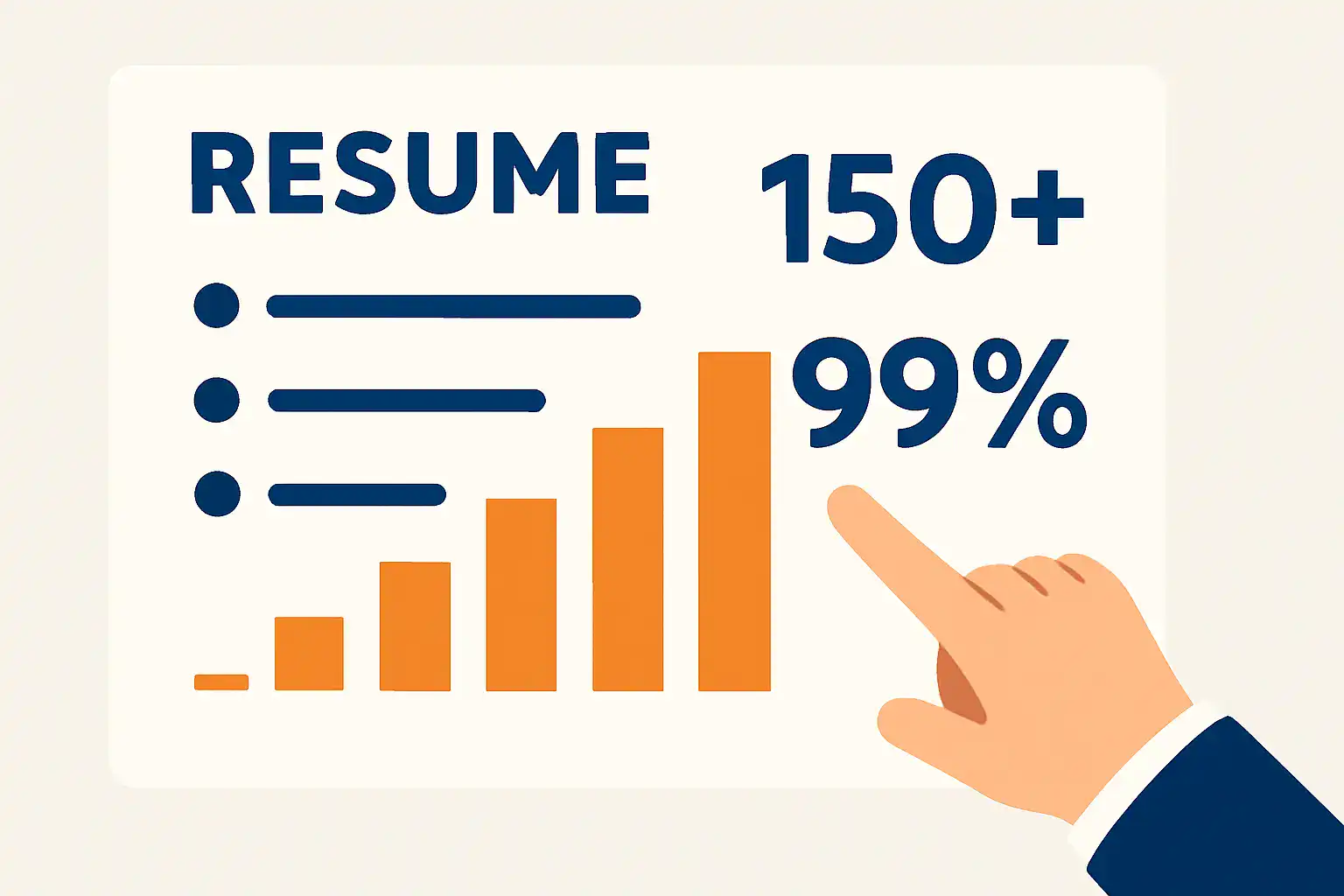
- Quantify Your Service Experience: Use numbers to describe cabin sizes, passenger volumes, and efficiency ratings (e.g., “served 150+ passengers per flight”).
- Showcase Language Proficiency: Fluency in secondary languages is a major asset for international carriers; list proficiency levels clearly.
- Highlight Certifications: Include First Aid, CPR, AED, and any specific flight attendant training certifications prominent in your education or skills section.
- Demonstrate Flexibility: Emphasize your adaptability to shifting schedules, time zones, and on-call reserve duties in your professional summary.
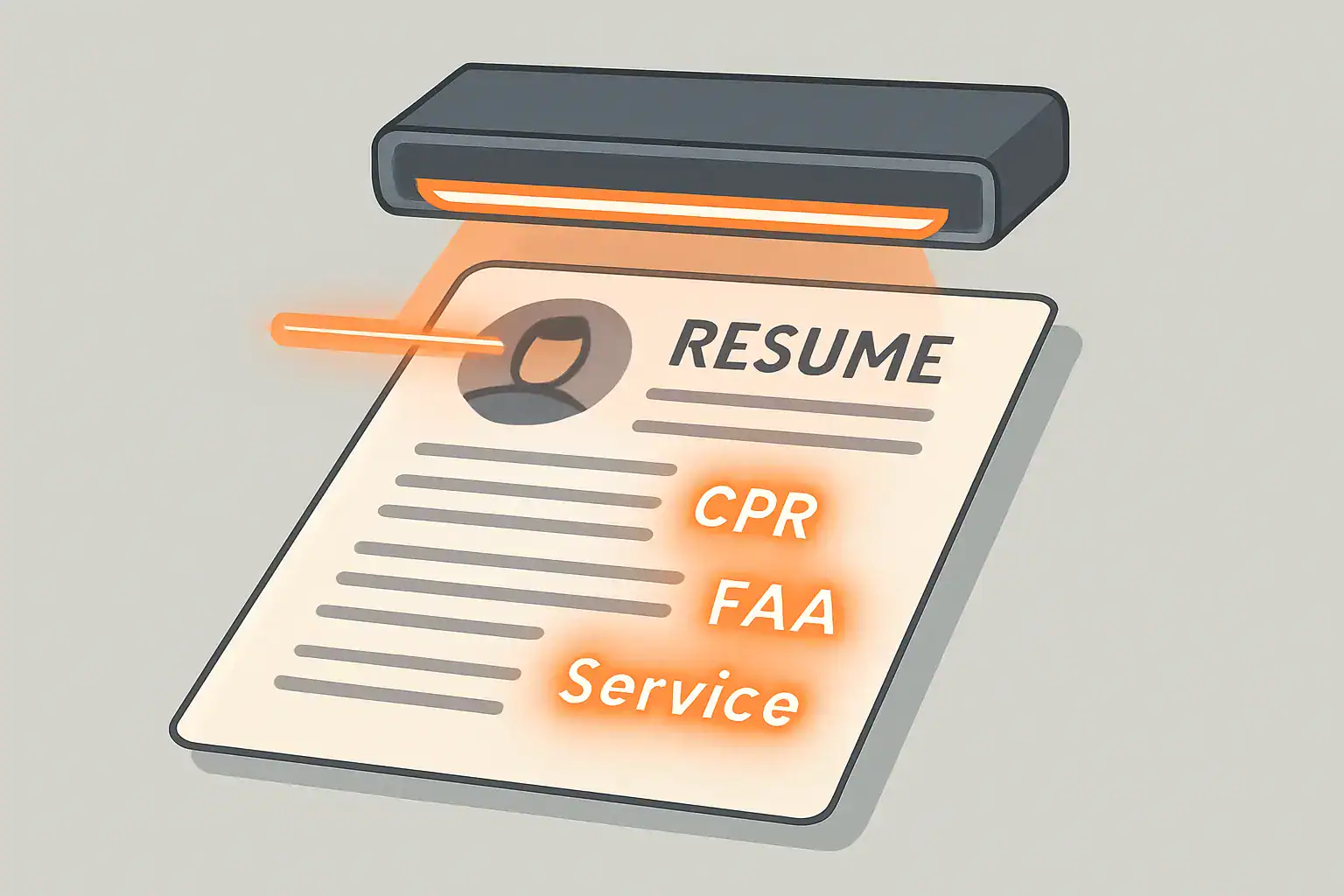
- Tailor for ATS: Use keywords like “Cabin Safety,” “Passenger Service,” and “Crisis Management” to pass Applicant Tracking Systems.
Introduction
Becoming a flight attendant is highly competitive, with major airlines often receiving tens of thousands of applications for a single recruitment drive. To secure an interview in 2026, your resume must do more than list past jobs; it must prove you are a safety professional who delivers exceptional customer service at 35,000 feet.
Your resume needs to strike a perfect balance between hospitality flair and rigorous adherence to safety standards. Recruiters scan documents in seconds, looking for specific indicators of reliability, composure under pressure, and cultural awareness. Below, we provide a comprehensive guide to crafting a document that stands out.
This guide covers:
- Strategic Formatting: How to structure your experience to highlight transferable skills.
- ATS Optimization: Keywords that get your application past the digital gatekeepers.
- Sample Content: Real-world examples of summaries and bullet points that work.
- Skills Breakdown: The precise mix of hard and soft skills airlines demand today.
Elena Rossi
Senior Flight Attendant • New York, NY
Email: elena.rossi.sky@gmail.com • Phone: (212) 555-0199
Profile
Multilingual Flight Attendant with 6+ years of experience in international aviation. Expert in cabin safety protocols, emergency response, and premium passenger service. Proven track record of managing in-flight medical emergencies and de-escalating conflicts. Fluent in English, Italian, and Spanish.
Experience
Senior Flight Attendant – TransGlobal Airlines (2021–Present)
Ensure safety and comfort for up to 300 passengers on long-haul international flights. Lead pre-flight briefings, conduct safety equipment checks, and mentor junior cabin crew. Maintained 99% on-time departure rating for assigned cabin duties.
Cabin Crew Member – AeroRegional Express (2018–2021)
Delivered high-standard service on regional routes. Managed cabin preparation, inventory restocking, and passenger boarding. Commended for handling a medical emergency by administering CPR and coordinating with ground medical support.
Education
Bachelor of Arts in Communication – New York University (2014–2018)
Flight Attendant Certification – Federal Aviation Administration (FAA) Approved Training (2018)
Skills
Emergency Evacuation • CPR & AED Certified • Conflict Resolution • Intercultural Communication • Food & Beverage Service • FAA Regulations
Certificates
Advanced First Aid & CPR (Red Cross, 2024) • Crisis Management Training
The Dual Role: Safety Professional and Hospitality Expert
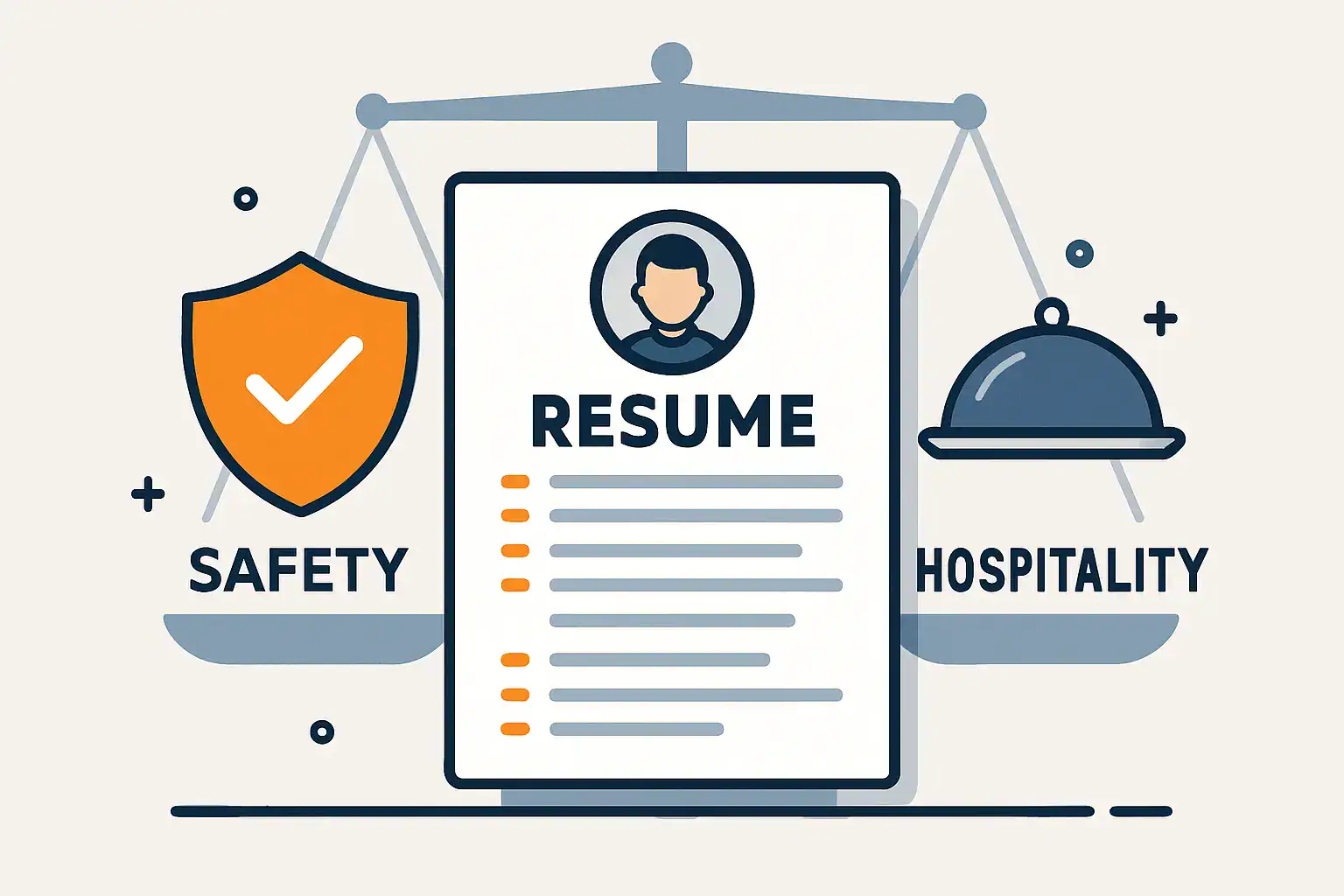
The most common mistake candidates make is focusing solely on the “service” aspect of the job. While serving drinks and meals is visible, the core of a flight attendant’s job is safety. Airlines are looking for individuals who can switch from a friendly host to a safety commander in seconds.
Your resume must reflect this duality. For every bullet point about customer satisfaction, ensure there is another about safety checks, compliance, or emergency preparedness. This balance tells recruiters that you understand the seriousness of the role.
Structuring Your Flight Attendant Resume
A clean, logical structure is vital. Airline recruiters often review resumes on tablets or through ATS software before a human sees them. The reverse-chronological format is widely preferred because it clearly displays your career progression.
Header and Contact Information
Keep this simple. Name, phone number, professional email, and city/state. You do not need to include your full street address. If you are willing to relocate (which is often necessary for this role), mention “Willing to Relocate” prominently.
Professional Summary
This is your elevator pitch. Instead of an objective statement (what you want), write a summary (what you offer). Mention your years of experience (or background in customer service), languages spoken, and key certifications.
If you are struggling to find the right words to describe your personality and professional demeanor, check out our guide on words to describe yourself to find powerful adjectives that resonate with hiring managers.

Writing a Compelling Experience Section
Your work history is the engine of your resume. Whether you are an experienced crew member or transitioning from another industry, you must use the STAR method (Situation, Task, Action, Result) to frame your achievements.
For Experienced Flight Attendants
Focus on specific aircraft types you have worked on (e.g., Boeing 737, Airbus A320) and the nature of the flights (domestic vs. international). Mention your role in safety audits, crew briefings, and handling in-flight medical or security incidents.
For Aspiring Flight Attendants (No Experience)
If you haven’t flown before, you likely have transferable skills. Roles in hospitality, healthcare, or high-pressure customer service are excellent prerequisites. For example, if you have worked as a server, you can highlight multitasking and conflict resolution. You can learn more about framing these skills in our guide for the waiter resume, which shares many overlaps with cabin crew duties.
Similarly, front desk experience translates well to gate management and passenger handling. See our receptionist resume guide for tips on showcasing organizational skills and first impressions.
Essential Skills for Your Resume
Airlines use Applicant Tracking Systems (ATS) to filter candidates based on keywords. Your skills section should be a mix of “Hard Skills” (technical abilities) and “Soft Skills” (interpersonal attributes).
- Hard Skills: CPR/AED First Aid, FAA/EASA Regulations, Cabin Prep, Food & Beverage Service, Point of Sale (POS) Systems, Swimming/Water Survival.
- Soft Skills: Cultural Sensitivity, Situational Awareness, Teamwork, Patience, Decisiveness.
To ensure you are including the most current and high-demand competencies, review our article on best skills to put on a resume in 2026.
Education and Certifications
While a college degree is not always mandatory, it is preferred by major legacy carriers. List your degree, the institution, and graduation year. More importantly, list valid certifications.
Must-have Certifications:
- Valid Passport (mention expiration date if it is years away to show readiness).
- First Aid / CPR / AED certification.
- Responsible Service of Alcohol (if applicable).
Optimizing for ATS Systems
Most airlines use sophisticated ATS software. If your resume formatting is complex (tables, graphics, columns), the system might misread it. Stick to clean fonts like Arial or Calibri and standard headings.
Furthermore, standard errors can cost you the interview. Before submitting, ensure you have proofread for common pitfalls. Our guide on resume errors and fixes for 2026 is an excellent resource to double-check your work.
For a deeper dive into how these systems rank your application, read about ATS resume optimization.
Tailoring for Specific Airlines
Different airlines have different cultures. A low-cost carrier might value efficiency and sales skills (selling food/duty-free), while a luxury international carrier values poise, etiquette, and language skills.
Research the airline’s values. If they pride themselves on “Friendly Service,” use that language. If they emphasize “Safety First,” mirror that. Tailoring your resume shows you have done your homework.
Handling Employment Gaps and Length
Airlines require strict background checks (often going back 10 years). Be honest about employment dates. If you have gaps, be prepared to explain them, but on the resume, focus on years rather than months if the gap is small.
Regarding length, keep it concise. Recruiters do not have time for three-page essays. For advice on document length, see our article on the two-page resume strategy.
International Considerations
If you are applying to airlines based in different regions, requirements may vary. For instance, Canadian airlines might have specific bilingual requirements (English/French). If you are looking at opportunities in that region, it can be helpful to review examples from our customer service resume Canada guide to understand local formatting nuances.
The Importance of Action Verbs
Passive language weakens your resume. Instead of saying “Responsible for safety checks,” say “Executed pre-flight safety inspections.” Instead of “Helped passengers,” say “Resolved passenger conflicts and ensured comfort.” Strong verbs convey authority and confidence.
For more inspiration on how to phrase service-oriented achievements effectively, look at our perfect customer service resume guide.
FAQ: Flight Attendant Resume
1. Should I include a photo on my flight attendant resume?
In the US, UK, and Canada, generally no, due to anti-discrimination laws. However, for airlines in the Middle East or parts of Asia, a professional headshot and full-body photo are often mandatory. Always check the specific application requirements of the airline.
2. How do I list my height and reach?
Some airlines have strict physical requirements for reaching overhead bins and safety equipment. You can include a small “Physical Attributes” section in your sidebar or details under your profile if the job posting explicitly asks for it.
3. What if I have no direct flight experience?
Focus heavily on customer service, safety-related roles (lifeguard, nurse, police), and language skills. Emphasize transferable skills like conflict de-escalation, working irregular hours, and teamwork.
4. How far back should my work history go?
Airlines typically require a 10-year background check for security clearance. While your resume doesn’t need to detail every job from 15 years ago, ensure your employment history for the last 10 years is accurate and verifiable.
5. Do I need to list my swimming ability?
Yes. Being able to swim is a non-negotiable safety requirement. You can list “Competent Swimmer” or “Water Survival Skills” in your skills section.
Author Information
Rebecca Lawson – Lead Resume & ATS Specialist
Rebecca Lawson is the Lead Resume & ATS Specialist at ResumeAITools, with 10+ years of experience helping job seekers across all industries improve their resumes and land better roles. With a Fortune 500 HR background, she understands exactly how ATS systems filter applicants and what hiring managers look for.
