

Key Takeaways
- Australian employers value job-matched skills that are clear, practical, and easy to prove.
- A strong skills section balances hard skills, soft skills, and technical tools used on the job.
- Resume skills should mirror the job description to pass Applicant Tracking Systems (ATS).
- Skills are strongest when supported by real examples in the work experience section.
- Simple language and Australian resume formatting improve readability and recruiter trust.
Introduction
If you’re searching Skills To Put On A Resume For Australian Employers, you want one thing: a skills section that Australian employers trust and Applicant Tracking Systems (ATS) can read. The right skills to write in resume are the skills that match the job ad, show real ability, and sound normal in Australian English.
This guide covers the Australian resume landscape, the basic CV rules, and the core resume sections. Then I go deep on the curriculum vitae skills section: hard skills, soft skills examples, technical skills for cv, and personal skills that work in Australia. I’ll also show skill lists by industry, what to exclude, how to tailor skills for specific roles (including sales and tech sales), how to show skills through achievements, and how to optimise for ATS.
Daniel Harris
Administrative Assistant / Customer Service • Brisbane, QLD • Australia
Email: daniel.harris.cv@gmail.com • Phone: +61 438 972 615
What Australian Employers Look For
Australian employers value practical, job-relevant skills over long or generic lists. A strong resume in Australia usually combines technical skills with workplace skills that show reliability, communication, and teamwork.
Most In-Demand Soft Skills in Australia
• Communication skills
• Teamwork and collaboration
• Reliability and punctuality
• Time management
• Adaptability and flexibility
• Problem-solving
• Customer focus
• Ability to work independently
Top Technical Skills Australian Employers Want
• Microsoft Word, Excel, Outlook
• Email and calendar management
• Data entry and record keeping
• CRM and internal systems
• Customer service (phone, email, live chat)
• Digital tools and online platforms
• Basic reporting and documentation
Skills by Common Job Type
Administrative / Office roles:
Organisation, attention to detail, document management, communication
Customer service / Retail:
Customer focus, conflict resolution, sales support, POS systems
Entry-level / Graduate roles:
Willingness to learn, teamwork, time management, adaptability
How to List Skills on an Australian Resume
Choose 6–10 skills that match the job description. Where possible, support skills with short examples in your work experience section. Australian recruiters prefer skills that are specific and realistic.
Resume Skill Example (Australia)
“Strong communication skills with experience handling customer enquiries via phone and email while meeting service targets.”
Key Differences in Australian Resumes/CVs
Australian resumes usually:
- Use Australian spelling (organised, prioritised)
- Keep personal details minimal (no photo for most roles)
- Use a direct tone (clear, professional, not overhyped)
- Highlight skills with outcomes (results, quality, safety, customer impact)
Australian CVs (curriculum vitae) are more common in academia, research, and some specialist roles. Many people still say “CV” for any resume in Australia, so the term depends on industry.
Essential CV/Resume Requirements for Australia
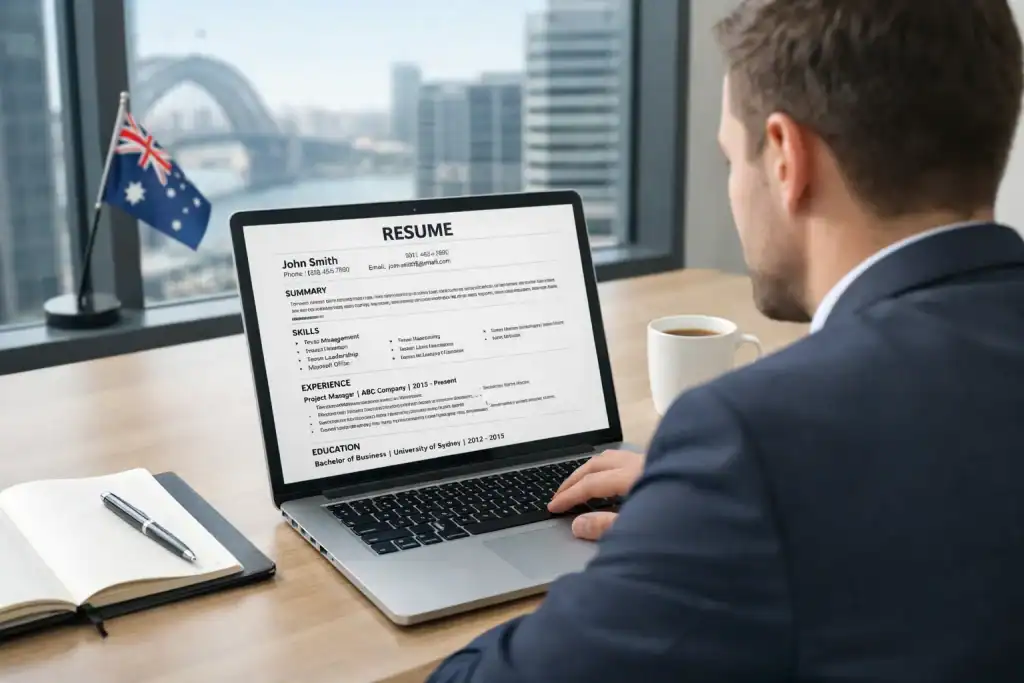
A resume for Australia is simple: it should be easy to scan, easy to parse, and easy to trust. The best rule is: claim less, prove more.
A strong skills section in Australia is not a random resume ideas for skills list. It is a clean set of job related skills that match the role.
Australia CV Tips and Rules
Use these rules:
- Use clear section headings
- Use bullet points (2–6 bullets per role is often enough)
- Use numbers when you can (time saved, errors reduced, revenue increased)
- Use consistent tense (past roles in past tense)
- Keep formatting plain (ATS likes plain)
Australia CV Format, Order and Layout
A common order:
- Contact details
- Professional summary or career objective
- Skills section
- Experience
- Education
- Certifications
- Optional: volunteering, projects, interests
- Referees (or “Available on request”)
This layout supports both human readers and ATS.
Structuring Your Killer Resume: Essential Sections
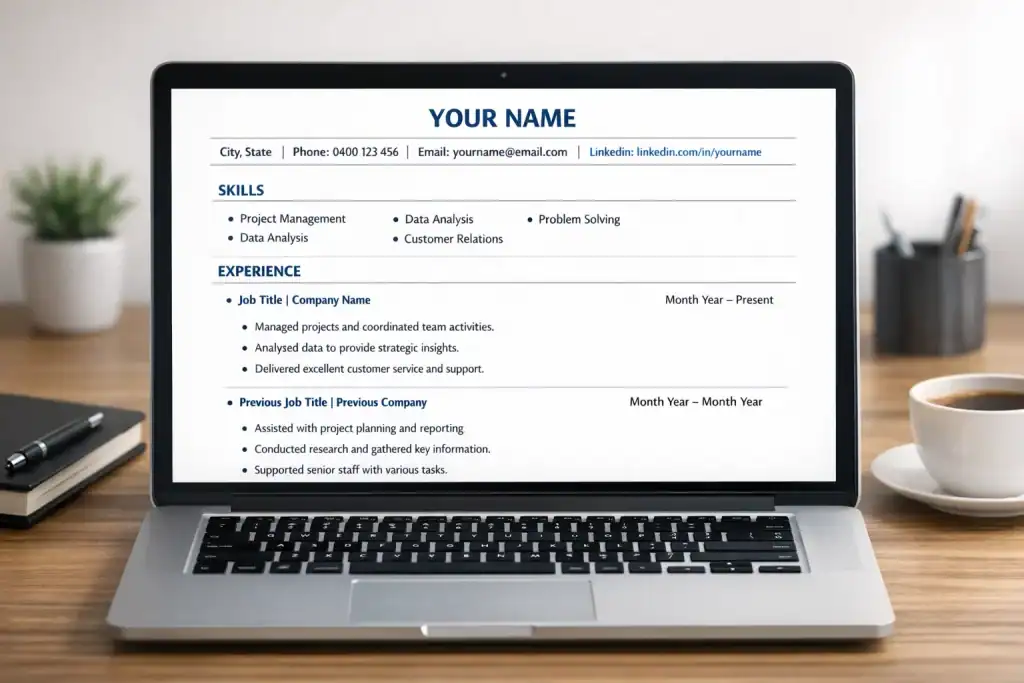
A strong resume structure makes your skills believable. If you list “stakeholder management” in skills, show stakeholder work in experience. If you list “technical skills for cv,” show tools you used in real tasks.
Contact Information: Make it Easy to Reach You
Keep it simple:
- Name
- City + state (Sydney NSW, Melbourne VIC)
- Phone
- LinkedIn (optional but helpful)
Avoid full street address for most roles.
Professional Summary (or Career Objective): Your Elevator Pitch
Your summary is where your best skills should appear first. Think of it as the “why this person” section.
Professional Summary: For Experienced Professionals
Example (experienced):
“Organised operations professional with 5+ years in logistics and inventory control. Strong communication skills, problem-solving skills, and safety focus. Confident with RF scanning, Excel reporting, and process improvement.”
Career Objective: For Entry-Level Candidates or Career Changers
Example (entry-level):
“Motivated graduate seeking an admin support role. Strong personal skills, fast learner, and confident with Microsoft Office. Keen to apply time management skills and clear communication in a busy office environment.”
Professional Experience: Showcasing Your Accomplishments
Your experience section is where skills become real. A good skills list without proof is weak. A shorter skills list with proof is strong.
Power Verbs and Quantifiable Achievements
Use power verbs:
- Coordinated, improved, reduced, resolved, delivered, managed, supported, trained, implemented
Add proof where possible:
- “Reduced invoice errors by 18% by updating checks and templates.”
Tailoring Your Experience to the Role
Match the job ad wording. If the job uses “stakeholder engagement,” use that phrase. If the job uses “customer service,” use that phrase. This is also ATS-friendly.
If you need help with interview language later, the internal link keyword why should we hire you is worth adding to your prep list.
Education: Your Academic Foundation
List:
- Course name
- School (RMIT, ANU, or another provider)
- Year
- Key projects (optional)
Training providers like Training.com.au can be a useful reference point for course names and skill-focused certificates.
Skills: Highlight Your Key Competencies
This is the core of this article. Your skills section should answer:
- The skills the job needs
- The skills you can do
- The skills you can prove
This is where phrases like skills to add on resume, skills to add in cv, skills to include on resume, and skills to list on resume belong.
Hard Skills (Technical Skills)
Hard skills are teachable and testable. Examples:
- Excel reporting
- CRM use
- Payroll processing
- Forklift operation
- SQL basics
- Xero/MYOB
Include tools and systems that appear in job ads.
Soft Skills (Interpersonal Skills)
Soft skills are how you work with people and manage tasks:
- communication skills
- teamwork
- adaptability
- problem-solving
- time management
Use soft skills examples that you can back up in experience bullets.
Awards and Recognition : Showcase Your Achievements
Include awards that prove performance:
- “Employee of the Month”
- “Top CSAT score”
- “Sales target winner”
Keep it short.
Professional Development and Certifications : Continuous Learning
Certifications are skills signals. Add:
- First Aid/CPR
- White Card
- RSA
- Forklift licence
- Short courses (Excel, project management)
If you’ve done Employability Skills Training (EST), write Employability Skills Training (EST) in your training section.
🚀 Boost your career today!
Interests/Hobbies : Adding a Personal Touch
Keep it brief and safe:
- sports, volunteering, community groups, coding projects
Skip anything that could distract from professionalism.
Referees
You can list referees, or write:
- “Referees available on request”
If you list referees, keep contact details correct and up to date.
Skills: A Deep Dive
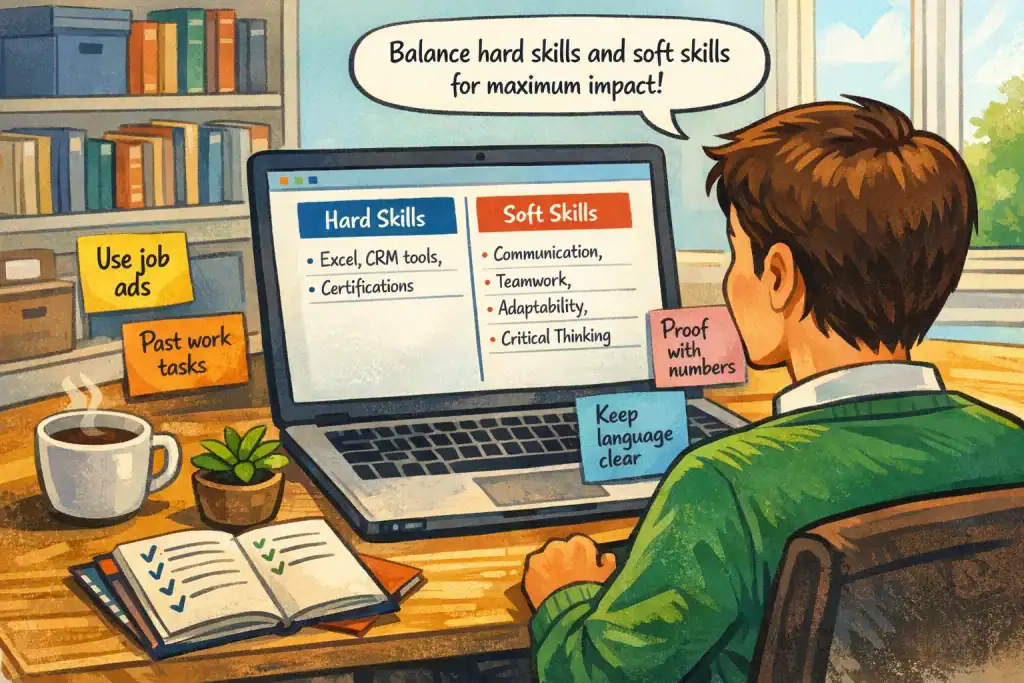
A strong skills section is not a keyword dump. It is a short, job-matched list that you repeat through your resume with proof. This is what most Australian employers want.
Hard Skills vs Soft Skills
You need both. Most roles want a balance:
- Hard skills show what you can do
- Soft skills show how you work
What Are Soft Skills?
Soft skills are behaviours and work habits. Examples:
- reliability
- communication
- teamwork
- adaptability
- critical thinking
Use “soft skills examples” in bullets, not just in the skills list.
What Are Hard Skills?
Hard skills are measurable:
- software tools
- certifications
- specific methods
- technical tasks
This is where technical skills for cv belongs.
Identifying Your Skills
Use 3 sources:
- Job ads (SEEK listings can help you see common wording)
- Past work tasks (what you actually did)
- Proof (numbers, tools, outcomes, scope)
Write your skills in plain terms. Keep English clear. If English is not your first language, focus on clear, professional English.
Examples of Skills for Your Australia CV/Resume
Below are skills examples, grouped by function and industry. Use these as resume skills and abilities examples, then tailor to your role.
Technical skills
- Microsoft Excel (reporting, pivot tables)
- Microsoft Word (documents, templates)
- CRM tools (Salesforce, HubSpot)
- Data entry accuracy
- Basic troubleshooting
- PDF editing and document control
Financial analysis and reporting skills
- Budget tracking
- Variance analysis
- Monthly reporting
- Reconciliation support
- Invoice processing
- Compliance checks
Sales and marketing skills
- Lead qualification
- Pipeline tracking
- Client relationship optimisation
- B2B Sales and account support
- Campaign reporting
- Content coordination
Medical and healthcare skills
- Patient booking support
- Clinical documentation basics
- Privacy and consent awareness
- Workplace health promotion
- Team communication
Legal and regulatory skills
- Record keeping
- Policy interpretation
- Australian regulatory compliance
- Risk and incident reporting
- Australian privacy principles awareness
Engineering and science skills
- Technical documentation
- Testing and quality checks
- Data logging
- Root-cause analysis
- Safety procedures
Human resources skills
- Recruitment coordination
- Interview scheduling
- Onboarding support
- HRIS data entry
- Policy and compliance tracking
Construction and trades skills
- White Card awareness
- Tool safety basics
- Site coordination support
- Remote area logistics awareness (role-dependent)
- Basic WHS reporting
Logistics and supply chain skills
- Inventory control
- Pick/pack and dispatch
- Stocktake support
- RF scanning
- Route coordination
- Remote area logistics
Data science and analytics skills
- Data cleaning basics
- Dashboard updates
- Data-driven insights delivery
- KPI reporting
- Basic SQL (if true)
Communication and interpersonal skills
- Clear written communication
- Effective stakeholder communication
- Customer service communication
- Conflict resolution basics
- Presentation support
Leadership and management skills
- Team support and coaching
- Multicultural team leadership
- Shift coordination
- Performance metric enhancement
- Cross-functional project coordination
Personal development skills
- Continuous learning mindset
- Independent critical thinker
- Resilient under pressure
- Proactive risk identification
- Time management skills
Teamwork and collaboration skills
- Adaptable cross-functional collaborator
- Supportive team player
- Handover clarity
- Shared goal focus
Customer service skills
- Complaint handling
- Customer experience optimisation
- POS systems (if relevant)
- Refunds and returns handling
- Service recovery steps
Organisational and administrative skills
- Scheduling and calendars
- Inbox management
- Document control
- Meeting notes
- Data accuracy checks
Creativity and innovation skills
- Process improvement ideas
- Simple workflow changes
- Innovative solution architect (only if true)
- Content creation support (role-dependent)
Problem-solving and critical thinking skills
- Problem-solving skills
- Basic root-cause analysis
- Options evaluation
- Quality and safety checks
- Complex problem visualisation (role-dependent)
Influence and negotiation skills
- Stakeholder alignment
- Vendor follow-up
- Basic negotiation support
- Escalation judgement
Project management skills
- Task tracking
- Timeline updates
- Risk logs (basic)
- Agile methodology implementation (only if true)
Top 5 Skills That Belong On (Almost) Every Resume
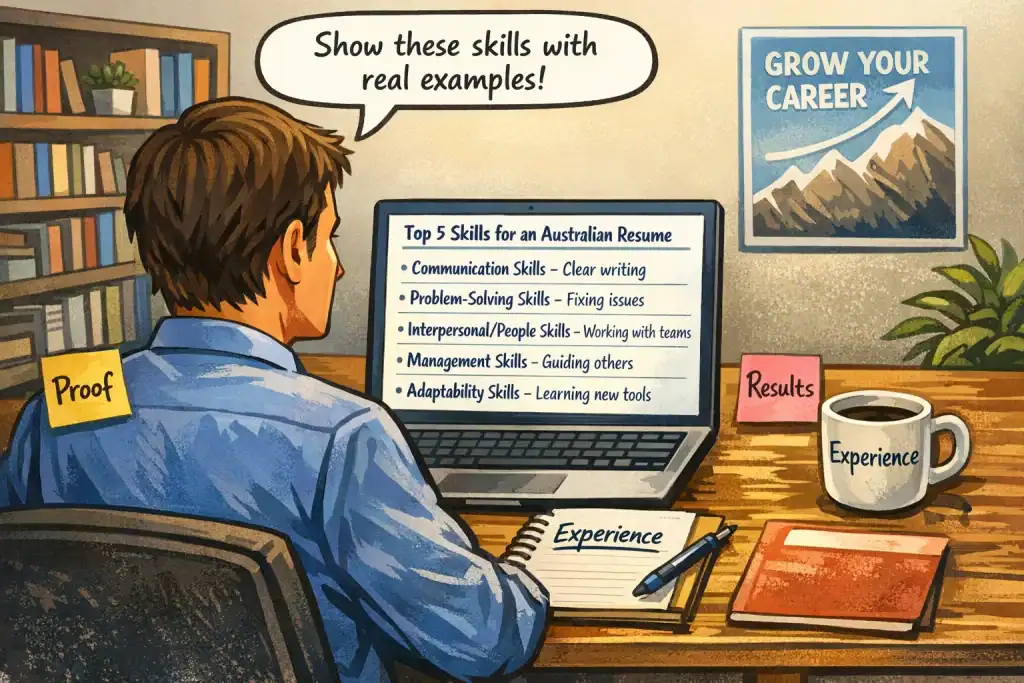
These are “safe” skills in Australia, when you can prove them:
Communication Skills
- Clear writing, clear handovers, clear updates
Problem-Solving Skills
- Fixing issues, preventing repeat problems
Interpersonal/People Skills
- Working with teams and customers calmly
Management Skills
- Planning work, guiding others, meeting targets
Adaptability Skills
- Learning new tools, working across tasks, handling change
Tailoring Your CV/Resume
Tailoring is the difference between a resume that gets ignored and a resume that gets interviews. Tailoring is also the best way to make ATS work for you.
How to Tailor Your Australia CV for Specific Roles
Do this in 10 minutes:
- Copy 10 skill keywords from the job ad
- Match them to your real work
- Put 6–10 in your skills section
- Echo 4–6 inside your experience bullets
This turns “skills to put on resume” into proof.
Importance of tailoring your CV skills to the job description
A job description is a scoring sheet. ATS looks for matches. People also look for matches. If your skills section is generic, it fails both.
If you need stronger self-description language, add the internal link keyword words to describe yourself to your reading list.
Tailoring Your Resume for Sales and Tech Sales Roles
Sales and tech sales are keyword-heavy. Australian employers want clear results and clear tools.
For Sales Roles
Include:
- lead generation
- pipeline tracking
- negotiation
- objection handling
- CRM updates
- revenue or target outcomes
For Tech Sales Roles
Include:
- discovery calls
- solution explanation
- stakeholder mapping
- demo support
- cybersecurity or SaaS terms (if relevant)
- B2B Sales outcomes
Mention tech context only if it is real. If you’re switching careers, keep claims tight.
🚀 Boost your career today!
Highlighting Your Experience
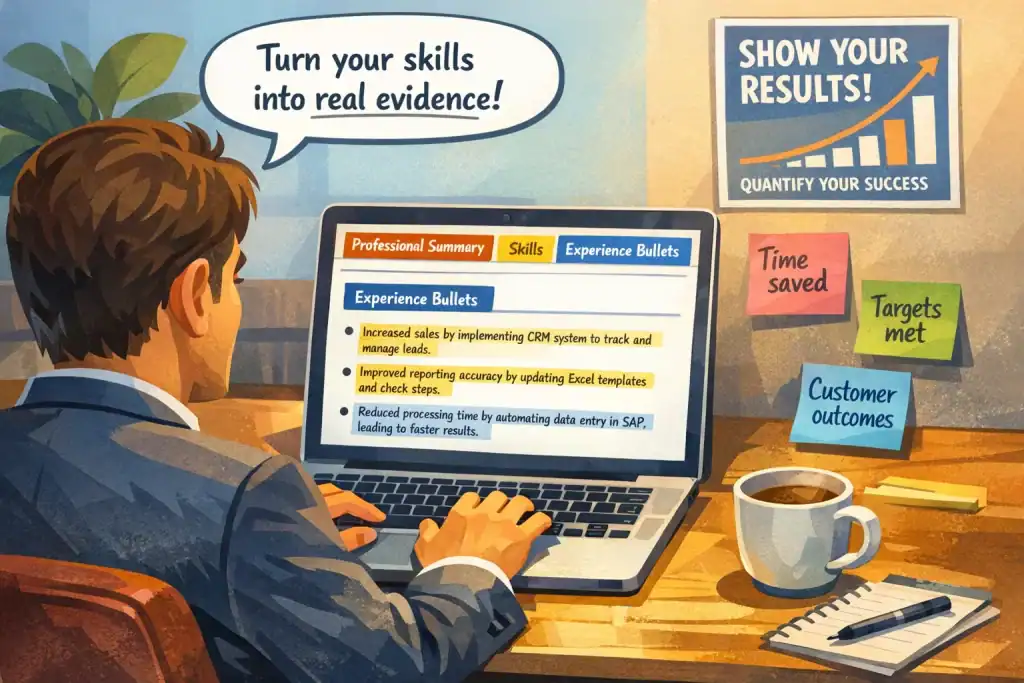
Your experience section should prove your skills. This is how you turn good resume skills examples into real evidence.
How to Highlight Work Experience on Your Australia CV
Use a simple bullet format:
- verb + task + tool + outcome
Example:
- “Improved reporting accuracy by updating Excel templates and check steps.”
How to Showcase Skills Through Achievements
Achievements should be specific:
- time saved (hours per week)
- errors reduced (percent)
- targets met (monthly)
- customer outcomes (ratings, repeat customers)
This is how good skills and abilities for resume becomes believable.
3 Resume Sections Where You Must Showcase Your Skills
- Professional summary
- Skills section
- Experience bullets
If these three do not match, the resume feels messy.
Adapting to Australian Work Culture
Australia has a direct work style. Employers value clear communication, practical outcomes, and team reliability.
If you are new to Australia, this section matters. If you are applying from overseas (Spain, Europe, New York, London), keep your tone simple and proof-based.
How to Adapt Your Australia CV to Australian Work Culture
Use:
- clear headings
- simple English
- realistic claims
- proof in bullets
Avoid:
- long paragraphs
- big claims with no results
- jargon with no meaning
Optimising for Applicant Tracking Systems (ATS)
Applicant Tracking Systems (ATS) scan your resume for keywords, job titles, and skills. A clean resume makes ATS parsing easier.
How to Make Your Australia CV ATS-Friendly
Use these rules:
- Use standard headings: Summary, Skills, Experience, Education
- Avoid tables and text boxes
- Put skills in simple bullet lists
- Repeat key skills in experience bullets
- Save as PDF unless the employer asks for Word
If you use an AI tool, keep editing until the resume sounds like you. If you need a cover letter tool, note the internal link keyword chat gpt cover letter.
Formatting and Design
Design should support reading. Design should not compete with content.
How to Create a Professional Layout for Your Australia CV
Keep:
- clear headings
- enough spacing
- consistent bullet style
Skip:
- heavy colours
- multi-column layouts
- fancy icons (often break ATS)
Font and Formatting: Professional and Consistent
Use one font family. Use 11–12 pt body text. Keep headings consistent.
Length: Keep it Concise
Most Australian resumes are 1–2 pages. Some senior roles can be longer, but keep it tight.
If you’re unsure, add the internal link keyword how many pages should a resume be and how long should a resume be to your reading list.
File Format: Save as a PDF
PDF keeps formatting stable. Use a clear file name:
- “FirstName_LastName_Resume.pdf”
Examples
Here are Australian CV Examples (short, ATS-friendly, and skills-focused). These are not “perfect people.” They are realistic.
3 Australian CV Examples
HR Australia CV Example
Name: Priya Sharma (Melbourne VIC)
Title: HR Coordinator
Professional Summary: HR professional with 4+ years supporting recruitment coordination, onboarding, and HR admin. Strong communication skills, policy awareness, and high data accuracy.
Skills (curriculum vitae personal skills + technical):
- HRIS updates, onboarding checklists, interview scheduling
- Stakeholder support, confidentiality, teamwork
- Document control, Excel reporting, compliance tracking
Experience bullet example: - “Coordinated 20+ interviews per month and improved onboarding turnaround time by standardising templates.”
Engineer CV Example Australia
Name: Daniel Nguyen (Sydney NSW)
Title: Graduate Engineer
Professional Summary: Engineer with strong problem-solving skills and technical documentation ability. Comfortable with testing, reporting, and safety processes.
Skills:
- Technical documentation, testing procedures, data logging
- Root-cause analysis, quality checks, safety compliance
- Cross-functional project coordination, clear reporting
Experience bullet example: - “Supported test reporting and improved documentation accuracy by creating a standard checklist.”
Australian CV example
Name: Jordan Lee (Brisbane QLD)
Title: Operations Assistant
Professional Summary: Reliable and organised operations assistant with dispatch and inventory experience. Strong time management skills and teamwork.
Skills (skills for resume):
- Pick/pack, RF scanning, stocktake support
- Excel reporting, data entry accuracy
- Customer service communication, problem-solving skills
Experience bullet example: - “Reduced packing errors by improving check steps and updating daily process notes.”
✨ Make your resume shine fast!
Other sections for your Australian CV
Optional sections:
- Projects
- Volunteering
- Certifications
- Short courses
- LinkedIn (if active and clean)
If you’re using a resume builder, keep the export plain and ATS-friendly.
Proofreading is Paramount: Eliminate Errors
Proofreading matters because it signals professionalism. Fix:
- dates
- job titles
- spelling
- repeated words
- messy formatting
Read your resume once on mobile and once on desktop. If the scan feels hard, simplify.
Summary
Skills to put on a resume for Australian employers should reflect real ability, not generic claims. The most effective resumes use a focused skills section that matches the job description, supports ATS screening, and is reinforced through work experience examples. By choosing relevant hard and soft skills, presenting them clearly, and backing them with results, job seekers can create resumes that Australian recruiters understand and trust.
FAQs
What to put in a resume in Australia?
Contact details, a short professional summary, key skills, work experience, education, and relevant certifications.
What skills are most in demand in Australia?
Communication skills, problem-solving skills, digital literacy, teamwork, time management, and technical skills related to the role.
What are the top 5 skills employers want?
Communication, problem-solving, teamwork, adaptability, and reliability.
What kind of skills should I put on my resume?
Job-related hard skills and soft skills that match the job description and can be supported with examples.
What are the 3 C’s of a resume?
Clear, concise, and customised.
Which CV format is best for Australia?
A reverse-chronological resume format with clear headings and ATS-friendly layout.
Is $70,000 a good salary in Australia?
Yes, $70,000 is a solid mid-level salary for many roles, depending on location and industry.
Author Information
Anny Kuratulain | Career Development Expert
Anny Kuratulain is a seasoned professional with over 9 years of experience in social media strategy, freelance coaching, and resume optimization. Specializing in helping professionals in various fields, Anny provides expert guidance on crafting resumes that stand out to hiring managers and Applicant Tracking Systems (ATS). Anny’s insights focus on empowering job seekers to highlight their key strengths, tailor resumes to job descriptions, and land the jobs they desire.
