

⭐Quick Summary:
Yes — a two-page resume is fully acceptable in 2026 and often the best choice for experienced professionals. Recruiters expect it, ATS systems scan it easily, and the added space lets you highlight achievements, skills, and experience without clutter.
👉 Want a cleaner, more professional resume? Upload yours and instantly see an AI-rewritten version.
⭐ Introduction: Why Two-Page Resumes Are Now the Standard
Crafting a two-page resume used to be controversial, but not anymore.
In 2026, the hiring world has evolved — modern roles are more complex, skills lists are longer, and companies want detailed, measurable results.
Job seekers search for:
- two-page resume
- crafting a two-page resume
- resume length guidelines
- resume formatting tips
- professional resume layout
- how to organise resume sections
- two-page resume examples
…because the old “one-page rule” no longer fits the reality of today’s professional landscape.
A well-crafted two-page resume is the new benchmark of professionalism.
To make sure your resume performs well in both systems and human review, follow these resume tips to beat ATS and impress hiring managers .
⭐ Can a Resume Be 2 Pages? Yes — And Here’s Why
People ask:
- Can a resume be more than one page?
- Resume 1 or 2 pages?
- Is a two-page resume acceptable?
The answer is YES every time.
A strong two-page resume:
- gives space for achievements
- increases readability
- improves ATS scoring
- makes your career progression clear
- supports detailed skill sets
- looks professional and modern
Recruiters now expect it for mid-level, senior, technical, and specialised roles.
⭐ When You Should Use a Two-Page Resume
Not everyone requires two pages — but the following groups absolutely benefit:
1. Senior, Leadership & Executive Roles
Directors, VPs, heads of departments, operations leaders — all require space to demonstrate:
- impact
- revenue gains
- strategy
- cross-functional leadership
- complex responsibilities
One page is too restrictive and makes achievements look generic.
2. Technical, IT & Engineering Professionals
Tech resumes need room for:
- languages
- frameworks
- tools
- stacks
- cloud platforms
- certifications
- projects
A one-page resume can’t accurately convey technical depth.
3. Academic, Research, Scientific & Medical Careers
Roles involving:
- research
- publications
- clinical rotations
- teaching
- grants
- presentations
…fit naturally into a two-page format.
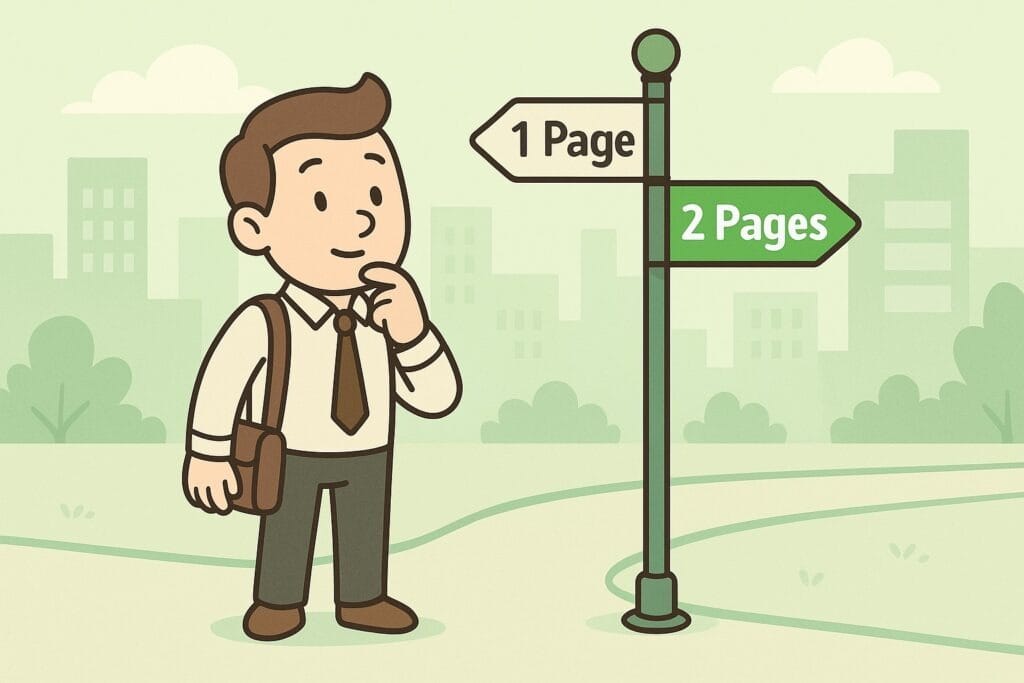
⭐What to Remove From a Two-Page Resume
A two-page resume gives you more room — but not everything belongs on it. To keep your resume powerful, clean, and focused, remove the following:
❌ 1. Jobs older than 15 years
Summarise or remove unless deeply relevant.
❌ 2. Task-only descriptions
Avoid duty-based bullets. Replace with outcomes and achievements.
❌ 3. Irrelevant roles
If it doesn’t support your career target, cut it.
❌ 4. Long paragraphs
Use short 1–2 line bullets for readability.
❌ 5. Outdated skills
Remove obsolete tools, software, and technologies.
❌ 6. Personal details
Age, marital status, full address, and hobbies do not belong.
❌ 7. References
Never place “References available on request.”
A strong two-page resume should feel clear, not crowded
4. Career Changers With Rich Experience
A two-page resume helps you:
- connect past roles to new goals
- display transferable skills
- show training and certifications
- demonstrate soft skills
This depth matters to employers.
5. Professionals With 8–15+ Years of Experience
Anyone with a long history of achievements should use two pages.
If your resume feels “too long,” these resume mistakes to avoid in 2026 will help you cut the right content.
⭐What to Include vs What to Leave Out (Clarifies Search Intent #3)
(Place after “What to Remove From a Two-Page Resume” or inside Top Tips.)
✔ Include on a Two-Page Resume:
- measurable achievements
- technical skills
- soft skills
- certifications
- leadership experience
- industry tools
- major projects
- volunteer work (if relevant)
- awards and recognition
✘ Leave Out:
- daily tasks
- irrelevant jobs
- outdated software
- personal information
- excessive early-career detail
- overly long descriptions
This section addresses the search intent:
“Help me decide what stays and what goes.”
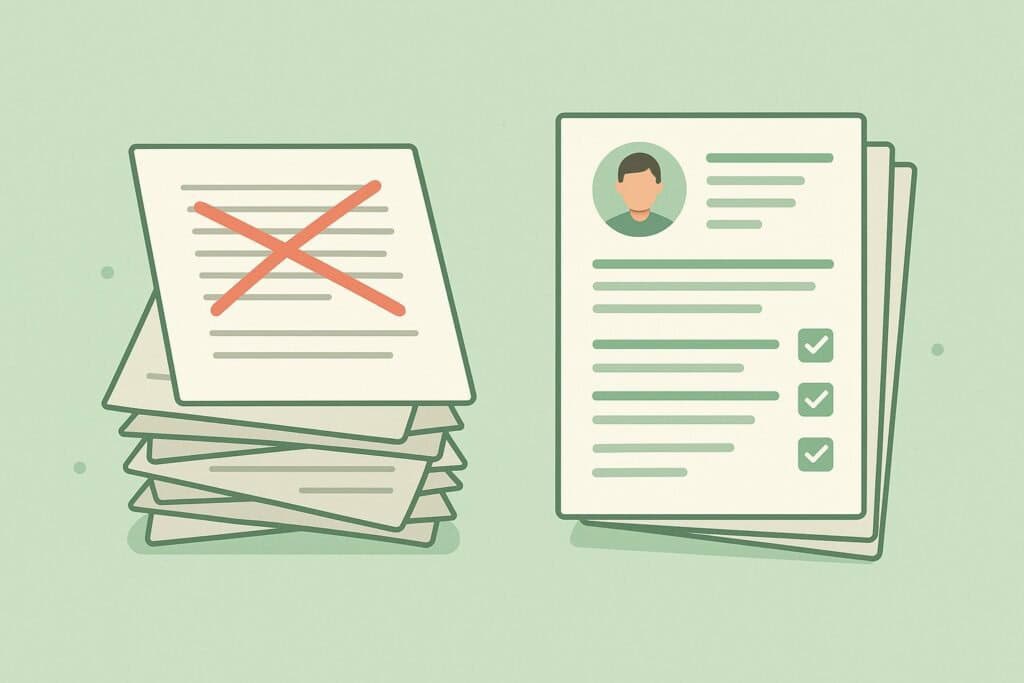
⭐ Advantages of a Two-Page Resume
Here’s why crafting a two-page resume works:
1. Clarity Without Clutter
You’re not forced to shrink down text or remove achievements.
Two pages allow space for clean formatting and readable bullet points.
2. Dramatically Better Readability
Recruiters scan resumes in seconds.
A clean, organised structure:
- makes your value obvious
- guides the eye
- separates content logically
Two pages improve clarity.
3. 100% ATS-Compatible
Modern applicant tracking systems easily scan two-page resumes — as long as you use:
- simple formatting
- clear headings
- standard fonts
- no tables or text boxes
A two-page layout is completely ATS-friendly.
4. More Space for What Matters
Two pages give room for:
- expanded skills
- certifications
- projects
- leadership experience
- technical competencies
- awards
All essential in 2026 hiring.
⭐ The Best Two-Page Resume Layout (2026 Standards)
This is the official two-page resume format recommended by resume writing best practices.
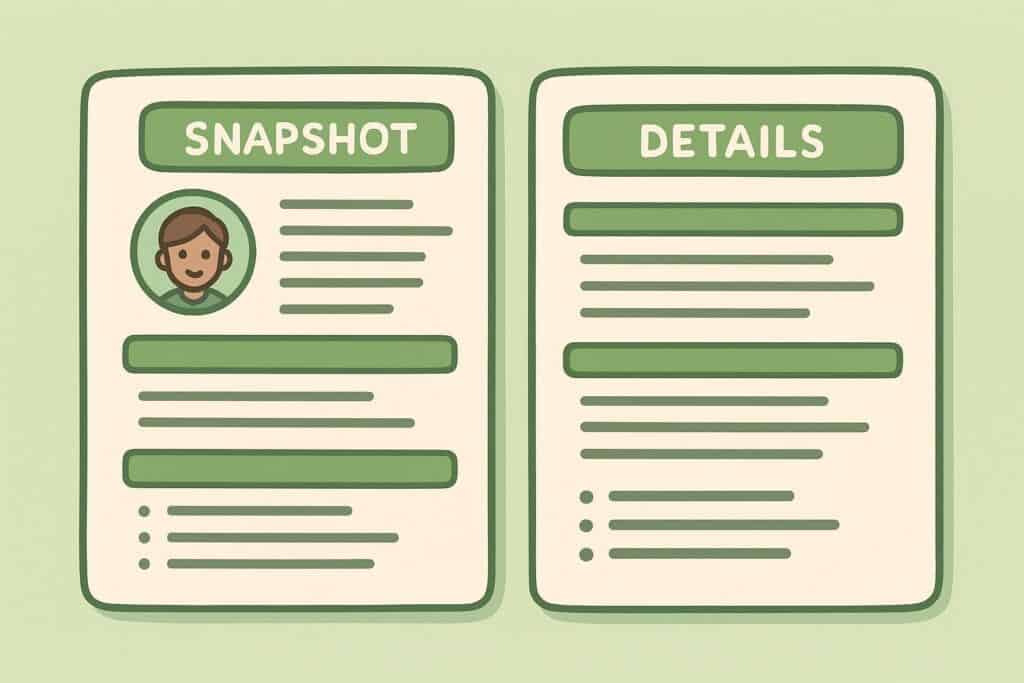
PAGE 1 — High-Impact Snapshot
1. Header (Also Added on Page Two)
Includes:
- name
- phone
- portfolio
2. Professional Summary (4–6 lines)
Clear, impactful overview of:
- your role
- your experience
- your strengths
- your value
- your focus
Keep it bold and confident.
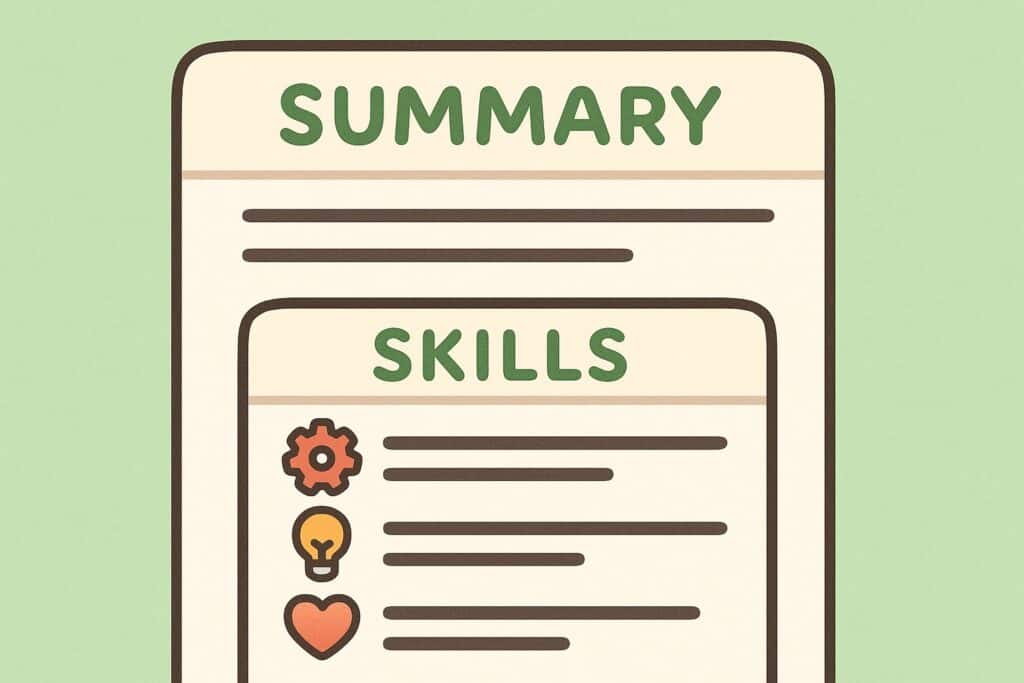
3. Core Skills / Technical Skills
Use 2–3 columns:
- hard skills
- soft skills
- tools
- methods
- systems
- technical stacks
4. Recent Experience
Show your strongest achievements first.
Use:
- action verbs
- measurable results
- short bullet points
- outcomes, not tasks
Examples:
- Improved workflow efficiency by 43%.
- Increased departmental revenue from $4M to $12M.
- Directed an 18-person cross-regional team.
PAGE 2 — Additional Depth
5. Earlier Work Experience
Show supporting roles, growth, and early achievements.
6. Education
Include:
- degree
- major
- institution
- graduation year (optional)
- academic awards
7. Certifications
Examples:
- PMP
- AWS Cloud Practitioner
- Google Data Analytics
- Scrum Master
- Medical licences
8. Optional Sections
Useful additions:
- volunteer work
- languages
- publications
- speaking events
- projects
- awards
- leadership roles
These categories strengthen a two-page resume significantly.
A strong two-page resume works best when it includes the resume skills employers want in 2026 in both skills and experience bullets.
📄 Download a clean, ATS-friendly two-page resume template — free to edit in Word or Google Docs.
⭐ Two-Page Resume Examples (2026)
Sarah Mitchell
Senior Software Engineer • Chicago, IL
Email: sarah.mitchell.office@gmail.com • Phone: (312) 555-4822
Profile
Senior software engineer with 8+ years of experience designing, developing, and optimizing scalable applications. Strong background in full-stack development, cloud architecture, API design, and leading engineering teams to deliver high-impact technical solutions.
Experience
Senior Software Engineer – Lakeshore Community Services (2020–2024)
Led development of cloud-based systems, improved application performance by 40%, mentored junior engineers, and delivered new features used by 200K+ users.
Software Engineer – Westfield Consulting Group (2017–2020)
Developed internal tools, implemented REST APIs, collaborated with cross-functional teams, and maintained 98% code quality score across major releases.
Education
Bachelor of Science in Computer Science – Harold Washington College (2015–2017)
High School Diploma – Lane Tech College Prep (2011–2015)
Skills
JavaScript • Python • React • Node.js • SQL • Cloud Computing (AWS) • API Development • System Architecture
Certificates
AWS Certified Developer – Amazon Web Services (2018)
Two-page resume examples you might search for include:
- two-page resume examples
- two-page resume template
- sample two-page resume format
- two-page resume examples by job title
Here’s how they look:
Senior Software Engineer (Example)
Page 1: Tech stack + major achievements
Page 2: Certifications + open-source work
Marketing Director (Example)
Page 1: Campaign metrics + leadership
Page 2: MBA + board roles + awards
Nurse Practitioner (Example)
Page 1: Clinical results
Page 2: Licences + education + specialties
⭐Page-Break Best Practices
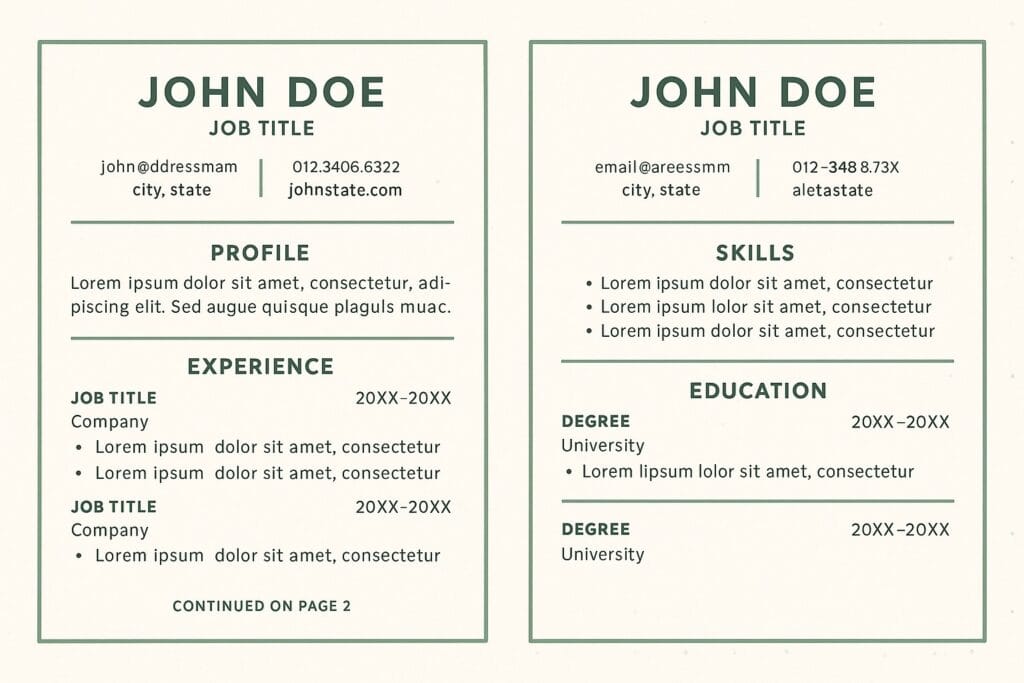
Most job seekers struggle with where to split page one and page two.
Use these rules to keep your resume clean and professional:
✔ Never split a job entry across pages
Move the full role to Page 2 if needed.
✔ Break between sections, never mid-content
Good break points:
- Experience → Education
- Skills → Experience
- Experience → Certifications
✔ Repeat your header on Page 2
Name • Email • Phone • LinkedIn
This prevents page separation issues.
✔ Page One should contain 55–60% of the content
Page One = high-impact achievements.
Page Two = supporting details.
✔ Avoid awkward white space
Balance is key across both pages.
⭐ Top Tips to Make Your Two-Page Resume Stand Out
1. Tailor for ATS
Use keywords from the job posting and ensure formatting is simple.
2. Use ATS-Friendly Templates
Avoid:
- tables
- graphics
- icons in text boxes
Use clean layouts.
3. Quantify Everything
Replace vague lines with measurable wins.
❌ Managed team
✔ Led 18-person multi-state operations team
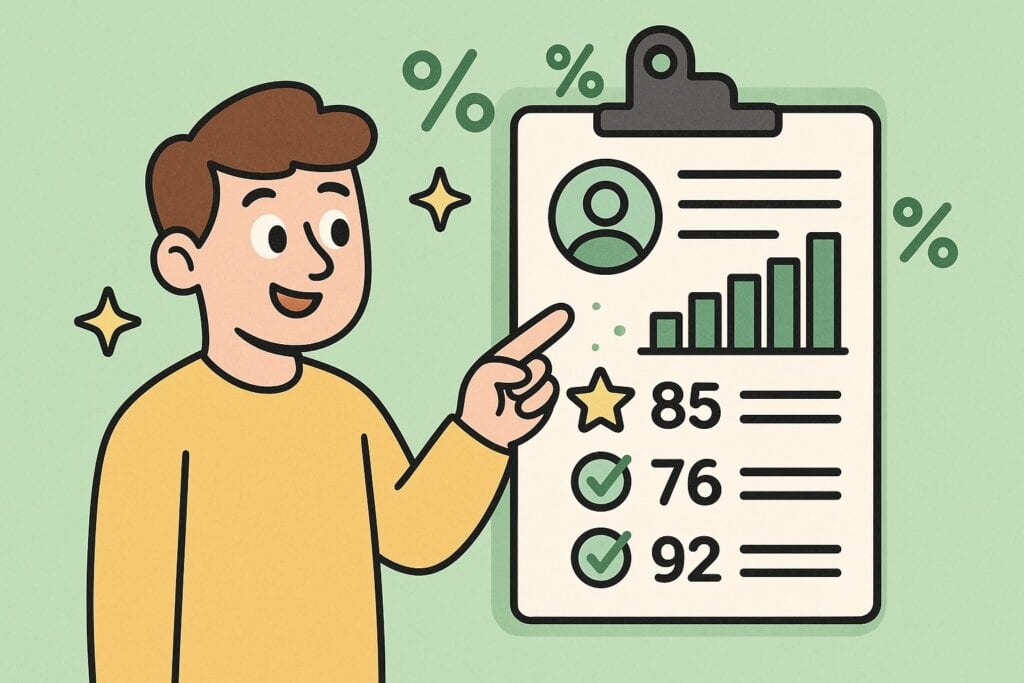
⚡ Make sure your two-page resume passes ATS — run a free ATS scan and get instant improvements.
⭐Bullet Point Transformations (Before & After Samples)
Users LOVE seeing real examples.
Here are powerful transformations:
❌ Weak
“Managed a team.”
✔ Strong
“Led an 18-person multi-region team, increasing productivity by 32%.”
❌ Weak
“Handled customer complaints.”
✔ Strong
“Resolved 80+ customer issues weekly, reducing escalations by 40%.”
❌ Weak
“Did filing and data entry.”
✔ Strong
“Digitised 4,500+ records, improving retrieval time by 55%.”
❌ Weak
“Helped with marketing campaigns.”
✔ Strong
“Supported multi-channel campaigns that increased lead generation by 26%.”
4. Keep Bullet Points to 1–2 Lines
Readable = hireable.
5. Save as PDF
Use a clear filename:
YourName-Resume-2026.pdf
⭐ Final Checklist Before Submitting
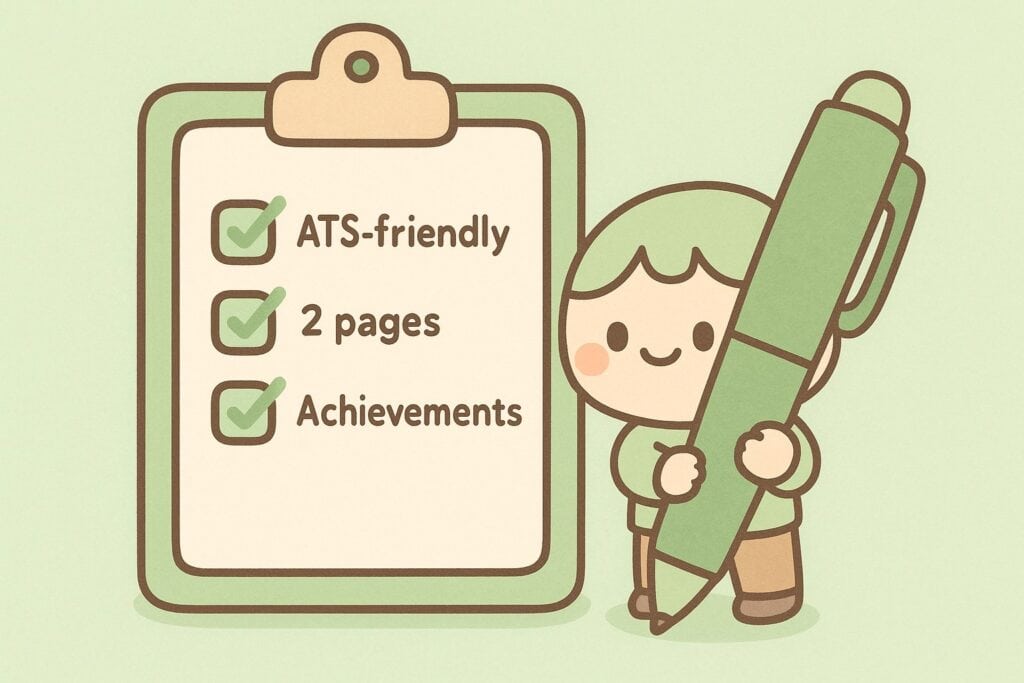
- consistent header
- clean sections
- organised layout
- measured achievements
- strong summary
- clear skills
- no split sections
- ATS-friendly formatting
If you’re building experience from scratch, this explains how to write a resume with no experience using projects and transferable skills.
⭐ Why Two-Page Resumes Win More Interviews
A strong two-page resume consistently outperforms a cramped one-page version. Today’s roles involve multiple skill areas, cross-functional responsibilities, and measurable outcomes — all of which require space to communicate.
Two-page resumes provide:
- richer career context
- clearer achievements
- improved readability
- better keyword alignment
- more room for skills, certifications, and projects
Instead of feeling “too long,” a well-designed two-page resume feels complete, modern, and easy to skim.
⭐ How Recruiters Scan Two-Page Resumes
Recruiters do not read resumes line-by-line. They skim key areas to decide whether to investigate further. Understanding their scanning behaviour helps you structure your document effectively.
1. Page One Must Communicate Immediate Value
Your professional summary, skills, and latest experience must instantly communicate who you are and why you matter. These sections make or break the first impression.
To maximize impact:
- use keywords early
- highlight strengths clearly
- show relevant industry tools
- include measurable achievements
This front-loaded structure is essential for crafting a two-page resume that works.
2. Page Two Reinforces Your Story
Page two should not feel like a “back page.” It should provide:
- earlier roles
- education
- certifications
- technical training
- awards or notable achievements
These elements verify your credibility and add depth without overwhelming page one.
3. Visual Organisation Drives Perception
Your professional resume layout influences how seriously a recruiter takes you. A clean, modern layout signals strong communication and organisational skills.
A polished resume uses:
- consistent spacing
- simple fonts
- clean section headings
- strong alignment
- readable bullet formatting
The layout should make the document skimmable and ATS-friendly.
⭐ How to Organise Resume Sections for Maximum Impact
Even with two pages, structure matters far more than length. Here’s the most effective organisational pattern:
PAGE ONE — High Value, Core Strengths
1. Header
Name, contact info, LinkedIn, and portfolio link.
2. Summary
4–6 lines summarizing expertise, strengths, and industry focus.
3. Skills Section
Use a 2–3 column layout for:
- hard skills
- soft skills
- tools and software
- certifications
- key strengths
4. Recent Professional Experience
Show your strongest achievements first.
Write bullets that highlight:
- measurable outcomes
- leadership
- specialised tasks
- improvements you made
PAGE TWO — Support, Details, and Professional Depth
1. Earlier Experience
Shorter entries that reflect progression and relevance.
2. Education
Degrees, majors, institutions, and academic awards.
3. Certifications
Vital for ATS and role fit (PMP, AWS, medical licences, etc.).
4. Additional Sections
Add what strengthens your candidacy:
- projects
- languages
- volunteer work
- publications
- awards
- leadership activities
This extra space is where a two-page resume becomes powerful.
⭐Where to Place Extra Sections on Page Two
Page Two is perfect for secondary but important information.
Use this order for maximum clarity:
1. Earlier Work Experience
Short, relevant bullets.
2. Education
Place high on Page 2 if medical/academic.
3. Certifications
Major impact on ATS ranking.
4. Projects
Especially valuable for technical or marketing roles.
5. Awards
Keep bullets short and achievement-based.
6. Volunteer Work / Leadership Roles
Shows initiative and character.
7. Languages
Keep at the bottom unless role-critical.
⭐ Advanced Formatting Tips for a Professional Two-Page Resume
Great formatting transforms your resume from “acceptable” to “high-impact.”
These rules ensure both ATS readability and human-friendly clarity:
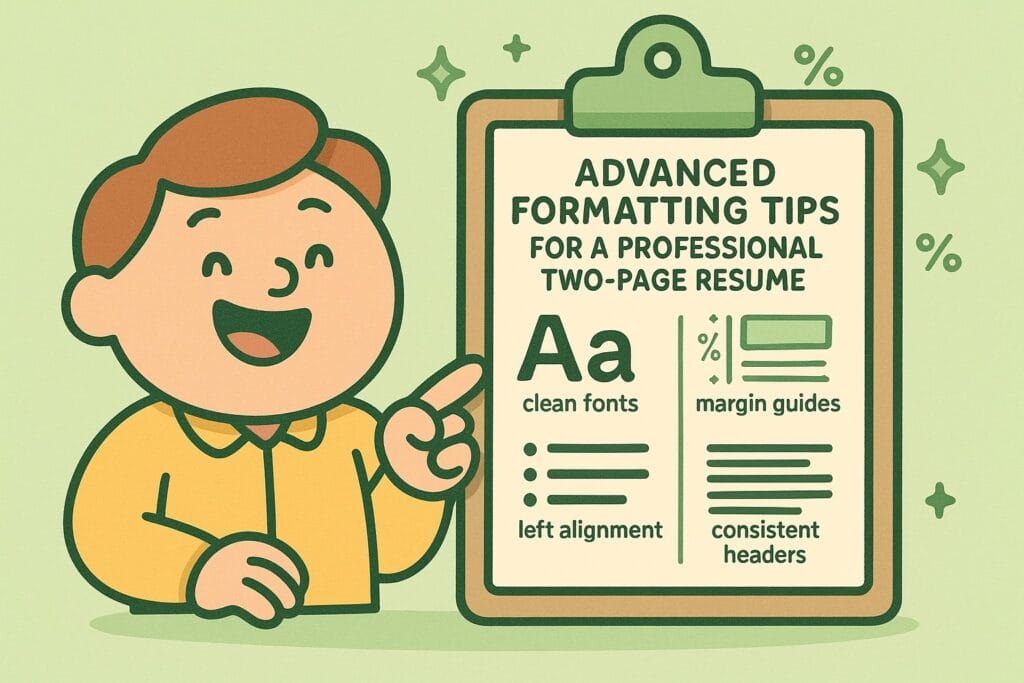
- Use clean fonts like Calibri, Lato, Helvetica, Inter, or Arial.
- Keep margins between 0.5–0.75 inches.
- Use bold text and caps sparingly to maintain emphasis.
- Keep bullet points to 1–2 lines max.
- Keep left alignment — avoid centered text.
- Avoid tables, graphics, text boxes, and decorative columns.
- Maintain identical headers and styling on both pages.
Professional layouts amplify the content you put inside them.
⭐ The Power of Metrics in Achievements
Metrics turn duties into results and instantly increase credibility.
Examples include:
- Increased retention by 28%
- Reduced costs by $140K annually
- Delivered 12+ major client projects
- Improved performance speed by 47%
- Managed portfolios exceeding $10M
- Trained 30+ team members
Use metrics whenever possible — they give your two-page resume stronger impact and help recruiters compare you to competitors.
⭐ ATS Keyword Strategy for 2026
An ATS-friendly resume format requires natural keyword inclusion.
Avoid stuffing — instead, place keywords strategically across:
- summary
- skills section
- bullet points
- certifications
- job titles
Focus on terms the employer truly cares about:
- tools (e.g., Salesforce, Python, AWS)
- methodologies (e.g., Agile, Risk Management)
- soft skills (e.g., communication, leadership)
- job titles and industry language
Crafting a two-page resume aligned with your job description dramatically boosts ATS performance.
⭐ How to Use Two-Page Resume Templates Wisely
A good two-page resume template saves hours of formatting and prevents layout errors.
Choose templates that include:
- matching headers
- consistent spacing
- clean section dividers
- balanced text distribution
- strong visual hierarchy
Avoid templates with graphics, icons inside text boxes, or decorative columns.
A clean, professional resume layout ranks higher and performs better with both ATS and human reviewers.
⭐ Skills Matter More Than Ever in 2026
Recruiters focus heavily on skill relevance. Your skills section should highlight:
Hard Skills
Software, systems, analytical tools, technical methods.
Soft Skills
Leadership, communication, organisation, problem-solving.
Technical Skills
Coding languages, cloud platforms, data tools.
Certifications
A major credibility booster in competitive fields.
A two-page resume gives these skills the space they deserve.
✨ Boost your resume keywords instantly — generate a recruiter-approved Summary & Skills section now.
⭐ The C-A-R Method for Stronger Bullet Points
Use the Challenge–Action–Result framework to craft high-quality bullets:
Challenge — What was the issue?
Action — What did you do?
Result — What outcome did you achieve?
Example:
“Redesigned a multi-department workflow, improving operational efficiency by 43%.”
This method transforms generic responsibilities into compelling, accomplishment-driven statements.
⭐ Future-Proofing Your Resume for 2026–2028
Hiring now prioritizes:
- adaptability
- digital literacy
- tech-enabled problem solving
- leadership capability
- multidisciplinary skills
A two-page resume gives you room to demonstrate all these traits with evidence, not vague claims.
⭐ Final Thought
A two-page resume isn’t long — it’s complete.
With the right structure, formatting, keywords, and storytelling, your resume becomes a powerful professional asset that reflects expertise rather than constraints.
🚀 Ready to land more interviews? Upload your resume for a complete AI-powered rewrite and optimisation.
⭐ Frequently Asked Questions About Two-Page Resumes (2026)
1. Is a two-page resume acceptable in 2026?
Yes. A two-page resume is not only acceptable — it’s the new standard for most mid-level, senior, technical, and specialized roles. Recruiters expect to see more depth, measurable achievements, and clear progression, which often cannot fit on one page.
2. Who should use a two-page resume?
A two-page resume is ideal for:
- professionals with 8–15+ years of experience
- managers, directors, and executives
- technical roles (IT, engineering, data, cyber security)
- medical, research, and academic fields
- career changers with extensive history
- candidates with certifications, projects, or portfolios
3. Will ATS reject a two-page resume?
No. Modern ATS systems easily process two-page resumes as long as you use simple formatting:
- standard fonts
- no tables or graphics
- clear section headings
- no text boxes or columns embedded in shapes
An ATS-friendly resume format supports both one-page and two-page layouts.
4. Should page two include a header?
Yes. Include your name and contact information on page two. This ensures your details remain visible if the pages get separated in an ATS or during printing.
5. What should go on page one vs page two?
Page 1:
- summary
- skills
- recent experience
- strongest achievements
Page 2:
- earlier roles
- education
- certifications
- volunteer work
- projects
- awards
6. How long should each section be in a two-page resume?
There’s no strict rule, but common best practices include:
- summary: 4–6 lines
- skills: 2–3 columns
- recent experience: 5–7 bullets each
- older roles: 3–5 bullets each
- certifications & extras: 3–10 lines depending on relevance
7. How do I avoid making a two-page resume look “too long”?
Keep your two-page resume clean and readable by:
- using consistent spacing
- limiting bullet points to 1–2 lines
- avoiding unnecessary tasks
- focusing on achievements
- removing outdated early-career roles
Your goal is clarity, not density.
8. Should I include all my past jobs?
No. Include only relevant roles — especially after 15+ years in the workforce. Early jobs can be shortened, grouped, or removed if they don’t add value.
9. What is the ideal font size for a two-page resume?
Use:
- 10.5–12pt for body text
- 12–14pt for section headings
- consistent spacing (1.0–1.15)
This keeps the resume readable while maintaining a professional look.
10. Is it better to use a resume builder or a template for a two-page resume?
Resume builders and templates are both effective as long as they’re ATS-friendly. Choose tools that use:
- standard fonts
- clean formatting
- simple layouts
Many popular resume builders offer two-page resume templates that work well in hiring systems.
11. Should I include a cover letter with a two-page resume?
If the employer requests a cover letter — yes. If not, include one when applying to leadership roles, specialised roles, or competitive positions. A strong cover letter can boost your chances significantly.
12. Do recruiters actually read two pages?
Yes — but they skim. Page one gets the most attention, but page two helps confirm:
- your credibility
- your experience depth
- your qualifications
- your career progression
A clean, well-formatted two-page resume improves your readability score.
13. Can a two-page resume be too long?
Yes — if it’s filled with unimportant or repetitive content. Your two-page resume should be 1.7–2.0 pages, not stretched beyond that. Quality over quantity always wins.
14. Should I use the same design on both pages?
Absolutely. Use:
- the same header
- identical margins
- matching fonts
- consistent colour accents
- equal spacing
This creates a unified, modern professional resume layout.
15. How do I make a two-page resume stand out?
Use these proven tactics:
include certifications and relevant extras on page two
With the right structure, formatting, keywords, and storytelling, your resume becomes a powerful professional asset that reflects expertise rather than constraints.
lead each bullet with action verbs
quantify your achievements
group related skills together
optimise with keywords from the job description
maintain clean spacing and layout
keep page one achievement-heavy
Before you finalise your resume, confirm you’ve selected the best skills to put on a resume in 2026 for your target role.
Renae Guttie – Market Research Specialist
Renae Guttie is a versatile and outgoing professional specializing in high-volume public engagement, sales operations and marketing. With extensive experience in market research, telefundraising, and call centre management.
