

How to Write a Resume With No Experience 2026
Summary
This comprehensive guide shows you exactly how to write a resume with no experience — using beginner-friendly resume formats, proven entry-level resume examples, skill lists, templates, and achievement-based bullet points. Designed for students, school leavers, and first-time job seekers, this roadmap teaches you how to create an effective entry-level resume that stands out, even without a job history. You’ll learn how to highlight your education, transferable skills, volunteering, extracurricular activities, personal projects, and strengths, transforming them into a professional, ATS-friendly resume that gets interviews.
Introduction
A resume with no experience isn’t a weakness — it’s a powerful opportunity to showcase your potential. In 2026, employers hiring for entry-level jobs no longer expect long work histories. Instead, they look for clear signs of:
- Trainability and willingness to learn
- Reliability and responsibility
- Strong communication skills
- Positive attitude and professional maturity
- Basic technical and people skills
- Growth mindset and motivation
- Ability to work in a team
Your resume’s job is to prove you have these qualities — even if you’ve never had a paid role. That’s why the most effective entry-level resumes highlight your:
- Education and relevant coursework
- Transferable skills
- Volunteering and school activities
- Projects you’ve completed
- Achievements and personal strengths
A well-written no-experience resume can be just as competitive — and often stronger — than a resume filled with generic casual work experience. This guide gives you every step, strategy, example, and format needed to build a polished, first-job resume that stands out to recruiters and helps you land interviews faster.
Before you build your first resume, avoid the most common resume mistakes beginners should avoid that reduce interview chances.
👉 Upload your current resume and let AI rewrite it into a polished, professional no-experience version in seconds.
I. Introduction: Why Writing a Resume With No Experience Is Achievable
If you’re searching “How to write a resume with no experience,” you’re probably feeling overwhelmed, unsure of what to include, or worried that employers won’t take your application seriously.
Let’s remove that pressure immediately:
🔥 Employers do NOT expect entry-level candidates to have work experience.
🔥 A no-experience resume is completely normal and very common.
🔥 You already have more experience than you think — you just haven’t framed it yet.
Here’s what hiring managers care about MUCH more than job experience:
- Can you communicate clearly?
- Do you show initiative?
- Do you learn quickly?
- Are you reliable and responsible?
- Can you work with others?
- Have you demonstrated effort in school or life?
- Did you complete projects?
- Do you have useful digital skills?
- Do you show maturity or leadership?
You don’t need a job to prove these qualities — they are shown in:
- School projects
- Assignments
- Extracurricular activities
- Volunteering
- Sports
- Creative hobbies
- Personal projects
- Online learning
- Group work
- Digital skills
- Community involvement
This guide teaches you exactly how to turn these experiences into a strong, professional resume employers WANT to read.
You’ll get:
- The best resume formats for no experience
- A full list of skills hiring managers love
- Examples you can copy and paste
- Achievement-based bullet points
- Templates
- Formatting rules
- Image prompts
- A massive FAQ section
- And 7 high-converting CTAs
By the end, you will have a polished, confidence-boosting resume that gets interviews even if this is your first job application ever.
To stand out faster, include the resume skills employers want in 2026 and support them with school or project achievements.
👉 Not sure where to begin? Try our AI-powered Entry-Level Resume Starter Template — built for first-time job seekers.
II. Understanding the Purpose of a No-Experience Resume
A no-experience resume isn’t meant to show your career history — because you don’t have one yet.
Its purpose is to show something EVEN more important:
➡️ Your ability to succeed in the role.
➡️ Your potential to grow and contribute.
➡️ Your personality, reliability, and soft skills.
Employers spend 6–10 seconds on average scanning a resume.
They want to instantly see:
✔ Can you communicate clearly?
A resume shows your writing and organization skills.
✔ Do you understand basic professionalism?
Your layout, formatting, and tone demonstrate maturity.
✔ Do you follow instructions?
If your resume follows hiring best practices, that’s a green flag.
✔ Do you show initiative?
Projects, volunteering, or hobbies prove you take action.
✔ Are you reliable?
Your descriptions, tone, and examples signal trustworthiness.
✔ Can you handle responsibility?
Leadership in school, commitments, and deadlines show this.
✔ Do you have the digital skills needed?
Schools teach more workplace skills than you realize.
Even without a job history, you can demonstrate every one of these traits.
A clean, well-structured resume with no experience can strongly impress employers — especially when it highlights school accomplishments, personal projects, and transferable skills.
III. The Best Resume Formats for No Experience
Choosing the right resume format is one of the most important steps.
If you choose the wrong format, your resume will highlight your lack of experience.
If you choose the right one, it will highlight your strengths.
These are the three formats that work BEST for beginners.
1. Skills-Based Resume (Functional Format)
The most powerful format for people with NO experience.
This format emphasizes:
- Skills
- Strengths
- Projects
- Education
- Achievements
…and it downplays your lack of job history.
Best For:
- Students
- School leavers
- First-time job seekers
- People with zero work experience
- Those confident in their soft + digital skills
Structure:
- Contact Information
- Professional Summary
- Skills (grouped into categories)
- Projects
- Education
- Extracurricular Activities
- Volunteering
Why it works:
It lets employers see the BEST parts of who you are — immediately.
Use these resume tips to beat ATS and impress hiring managers so your resume stays clean, readable, and scan-friendly.
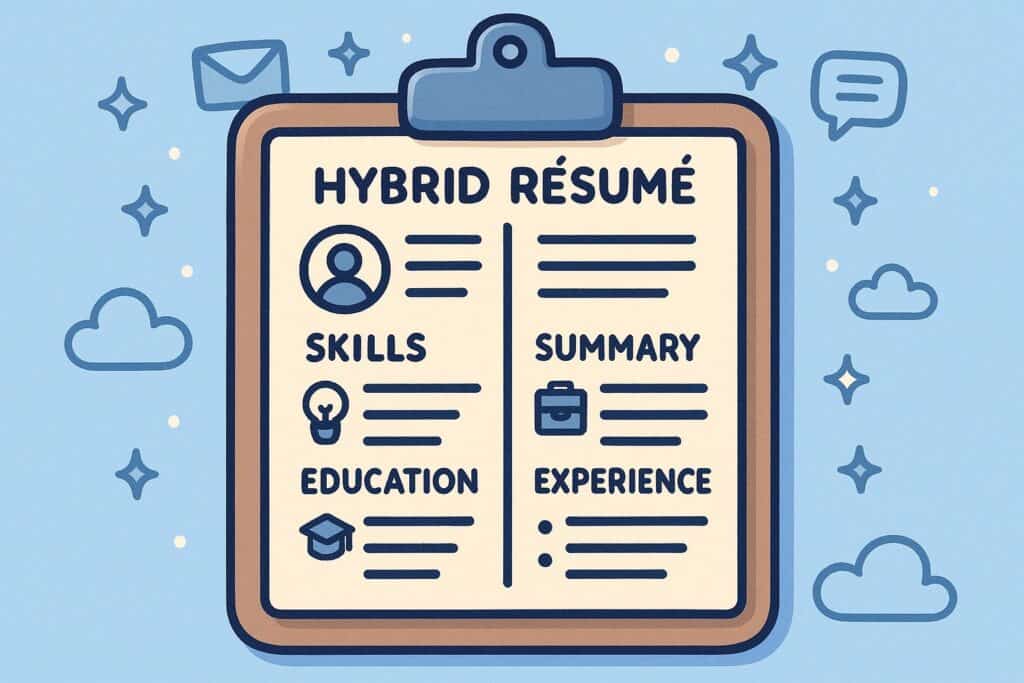
2. Hybrid Resume (Combination Format)
This format combines the strengths of the skills-based format with small experience snippets, including:
- Informal work
- Babysitting
- Tutoring
- Helping at school events
- Sports team leadership
- Student responsibilities
Best For:
- Students with light experience
- Anyone with strong school involvement
- People with multiple projects
Structure:
- Contact Info
- Summary
- Skills
- Experience Alternatives
- Projects
- Education
- Awards (optional)
Why it works:
It still highlights your skills but makes the resume feel more “professional.”
3. Education-First Resume Format
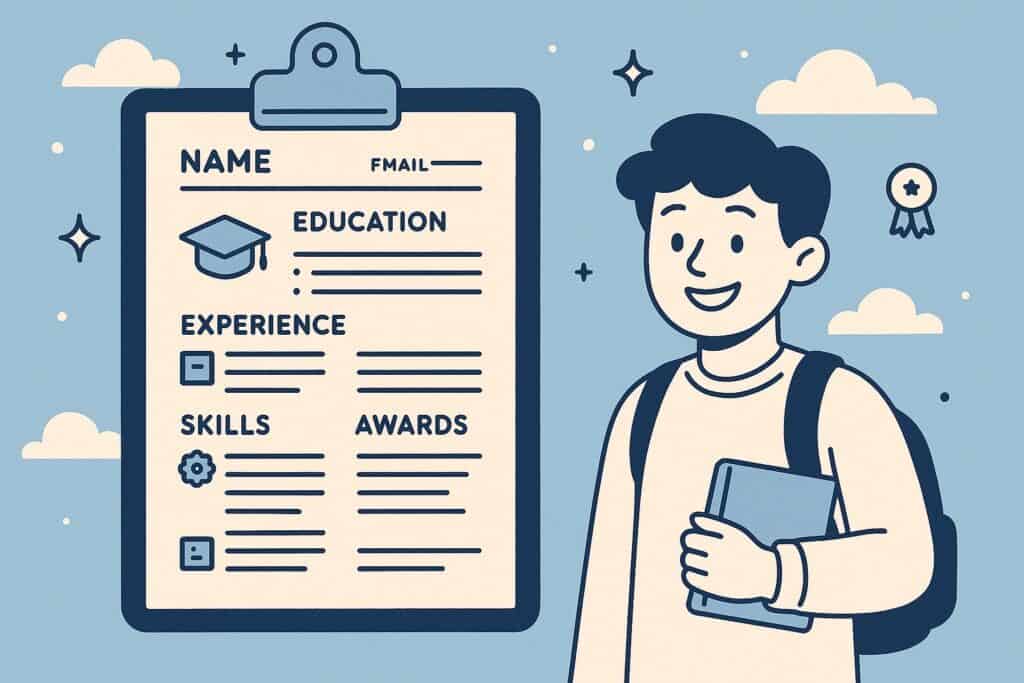
Perfect for people with strong academic backgrounds, relevant coursework, or impressive school achievements.
Best For:
- High school students
- College applicants
- Intern applicants
- Students with high grades, awards, or academic projects
Structure:
- Contact Info
- Summary
- Education
- Skills
- Projects
- Awards or Certifications
- Extracurriculars
- Volunteering
Why it works:
Your education becomes your “experience.”
👉 Want AI to choose the perfect resume format for you? Upload your resume for an instant recommendation.
IV. What to Put on a Resume With No Experience
This is the part everyone worries about — but it’s actually very easy once you know what counts as “experience.”
Spoiler: You have more experience than you think.

1. Education (Strongest Section for Beginners)
Include:
- School
- Year level / graduation year
- Achievements
- Awards
- Coursework
- Projects
- Groups or leadership
Example (Copy & Paste):
Springfield High School — Graduating 2026
- Relevant Coursework: Business Studies, English, Digital Media
- Senior Project: Built a full presentation on marketing psychology
- Achievement: High Distinction in English + school leadership badge
2. Skills (Your Power Section)
Top Soft Skills Employers Love:
- Communication
- Customer service
- Teamwork
- Reliability
- Problem-solving
- Initiative
- Time management
- Adaptability
- Positive attitude
- Leadership (even small roles count)
Beginner-Friendly Hard Skills:
- Google Workspace
- Microsoft Word / Excel
- Canva
- Email management
- Filing basics
- Data entry basics
- POS familiarity
- Social media basics
- Presentation tools (Google Slides, PowerPoint)
3. Extracurricular Activities
Extracurriculars demonstrate:
- Dedication
- Leadership
- Time management
- Collaboration
- Initiative
Examples:
- Sports
- Drama / theatre
- Library assistance
- Student leadership
- Robotics club
- Debate team
- Choir / band
- Art or media groups
4. Volunteering
Volunteering is real experience.
Examples:
- School events
- Community centers
- Tutoring
- Charity fundraisers
- Local sports clubs
- Church volunteering
- Library programs
5. Projects (Highly Valuable)
Projects instantly show ability.
Examples:
- Designed posters
- Built a website
- Managed social media
- Filmed & edited videos
- Completed science fair projects
- Built a portfolio
- Created a blog
- Organized a class presentation
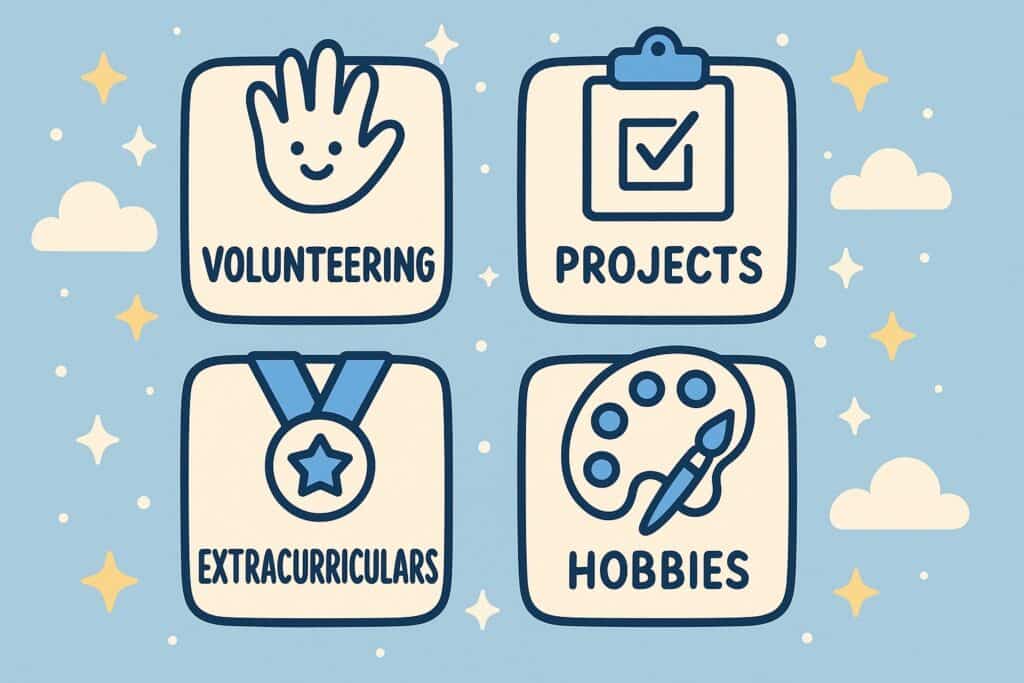
6. Hobbies With Achievements
Hobbies show initiative, discipline, creativity, and consistency.
Examples:
- Photography
- Fitness
- Writing
- Gaming teams
- Social media content
- Drawing
- Video editing

👉 Want AI to turn your projects into job-ready bullet points? Upload your resume now.
V. Formatting Your Resume (No Experience)
Formatting determines how professional your resume feels.
Formatting Rules:
- One-page only
- Use bullet points
- Keep spacing consistent
- Use clear section headers
- Stick to clean fonts
- Leave plenty of white space
- Save as PDF
- Use a simple, ATS-friendly layout
ATS Tips:
- No text boxes
- No columns
- No photos
- Use keywords from the job ad
Use these resume tips to beat ATS and impress hiring managers so your resume stays clean, readable, and scan-friendly.
👉 Want your resume to pass ATS scanning? Upload it for an instant optimization.
VI. Examples of Strong Summaries (Copy & Paste)
⭐ Example 1 — Student / First Job
“Motivated Year 12 student seeking an entry-level position in retail or hospitality. Strong communication and teamwork skills developed through group assignments and community events. Reliable, friendly, and eager to contribute to a customer-facing team.”
⭐ Example 2 — Tech Beginner
“Detail-oriented student with hands-on experience using Google Workspace, Canva, and basic social media management. Creative, responsible, and able to quickly learn new tools.”
⭐ Example 3 — Customer Service Beginner
“Friendly, positive communicator with experience supporting school events and collaborating with peers. Passionate about helping customers and creating positive experiences.”
👉 Want AI to rewrite your summary in 10 stronger versions? Upload yours now.
VII. Tips for Success
1. Be honest
Hiring managers appreciate authenticity.
2. Use action verbs
Examples: Organized, assisted, coordinated, created, designed, presented.
3. Focus on achievements
Instead of duties, write measurable benefits.
4. Tailor to each job
Use keywords from the job post.
5. Remove clutter
Simple = professional.
6. Show personality
Employers love enthusiasm.
7. Proofread carefully
Spelling mistakes are an instant red flag.
👉 Ready to create a job-winning resume with no experience? Upload yours and let AI transform it in seconds.
IX. FAQ — No-Experience Resume (2026 Edition)
1. Can I really make a resume with no experience?
Yes. Employers hiring entry-level candidates expect little or no experience. They look for skills, motivation, education, and potential instead.
2. What should I put on a resume if I’ve never had a job?
Focus on your education, projects, volunteering, extracurricular activities, relevant coursework, certifications, and transferable skills.
3. What is the best resume format for beginners with no experience?
A skills-based (functional) or education-first resume works best because they highlight your strengths instead of your job history.
4. Should I include a summary on a no-experience resume?
Yes — a short, strong summary helps show your personality, motivation, and career goals, especially when you don’t have work experience.
5. How long should a resume with no experience be?
One page is ideal. Recruiters prefer concise, easy-to-read entry-level resumes.
6. Should I include a photo on my resume?
No. Photos can interfere with ATS systems and introduce unconscious bias. Stick to a clean, text-based layout.
7. What skills look best on a no-experience resume?
Communication, teamwork, reliability, problem-solving, customer service, time management, digital literacy, and a positive attitude.
8. What counts as experience if I’ve never worked?
Projects, school assignments, presentations, volunteering, leadership roles, clubs, sports, creative hobbies, babysitting, tutoring — all count.
9. Should I list my GPA?
Only if it’s strong or required. If it’s average, leave it off and emphasize projects and strengths.
10. Do employers care about volunteering?
Yes. Volunteering shows responsibility, initiative, soft skills, and work ethic. It’s treated as real experience.
11. How do I make my resume stand out without experience?
Use achievement-style bullet points, highlight skills, include strong projects, tailor your resume to the job, and keep the formatting simple.
12. What soft skills are most attractive to entry-level employers?
Communication, teamwork, reliability, conflict resolution, customer service, adaptability, and time management.
13. Should I include hobbies on my resume?
Yes — if they demonstrate valuable traits like creativity, discipline, leadership, or measurable results (e.g., running a social page).
14. Can I use AI to help write my resume?
Yes. AI can rewrite your content, format your resume, generate bullet points, and optimize it for ATS — extremely helpful for beginners.
15. Should I tailor my resume for each job?
Absolutely. Match your skills and keywords to the job description for better ATS results and higher interview chances.
16. What if I don’t have any skills yet?
You do. School, life, and personal projects teach communication, time management, organization, digital skills, teamwork, and problem-solving.
17. Should I use a template for a no-experience resume?
Yes — templates give structure, improve readability, and help you organize content effectively.
18. Do employers actually read entry-level resumes?
Yes. Recruiters actively search for motivated beginners and rely on soft skills and potential when hiring for entry-level roles.
19. What mistakes should I avoid on a no-experience resume?
Avoid long paragraphs, cluttered designs, irrelevant skills, spelling errors, and overly casual language.
20. How soon can I expect to get a job with no experience?
It varies, but beginners who use a clean resume, tailor applications, show enthusiasm, and apply consistently typically get interviews faster.
VIII. Conclusion
A resume with no experience isn’t a weakness — it’s a blank canvas filled with potential. Employers care far more about who you are, how you communicate, and how you approach learning than whether you’ve held a job before.
By using the strategies in this guide — choosing the right format, highlighting your skills, showcasing projects, describing extracurriculars, and formatting your resume cleanly — you will stand out confidently even as a beginner.
You now have everything you need to create a polished no-experience resume that gets interviews in 2026.
Use these resume tips to beat ATS and impress hiring managers so your resume stays clean, readable, and scan-friendly.
Renae Guttie – Market Research Specialist
Renae Guttie is a versatile and outgoing professional specializing in high-volume public engagement, sales operations and marketing. With extensive experience in market research, telefundraising, and call centre management.
